
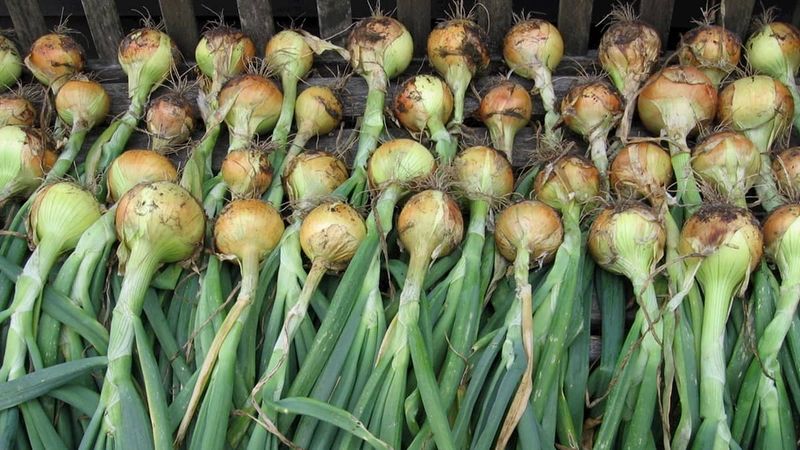
Plant one onion bulb and pull up one onion at harvest – that is what most people expect. But depending on what you actually put in the ground, you could end up with a single large bulb or a whole cluster of smaller ones. The answer hinges on one key detail: the type of planting material you used. Getting that distinction right is the difference between a modest harvest and a genuinely rewarding one.
Start by identifying the onion you planted
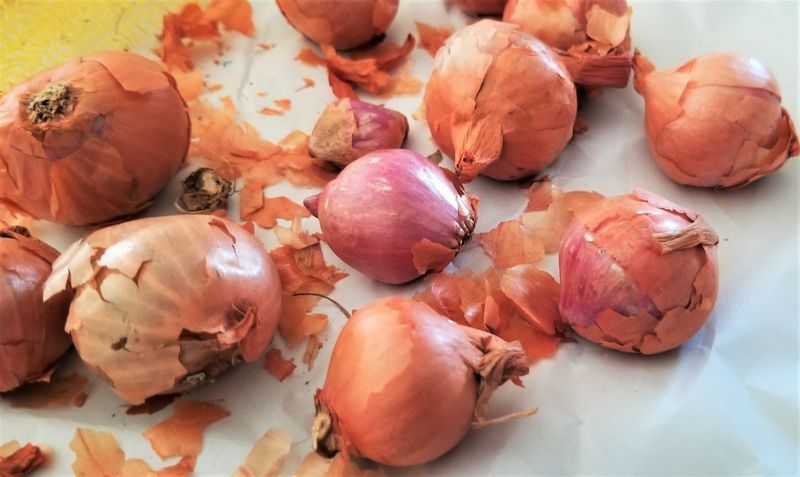
The word “bulb” gets used loosely in gardening, and with onions that looseness causes real confusion. Depending on who you ask, a single onion bulb might mean a small dormant set from a garden center, a full-sized yellow onion from the grocery store, a shallot bulb that already contains several separable cloves, or a multiplier onion bulb that forms a cluster underground. Each one behaves differently in the garden, so the first step is figuring out exactly what you planted.
Common bulb onions – the yellow, red, and white types most people grow – are normally single-bulb plants. Utah State University Extension guidance on planting and spacing describes onion sets as small dormant bulbs intended to produce one larger bulb at harvest. Bunching onions, by contrast, never form a conventional round bulb at all; they produce slender stalks harvested for their greens. Egyptian walking onions are stranger still, forming small bulbils at the top of the stalk rather than underground.
True shallots and multiplier onions – sometimes called potato onions – belong to a cluster-forming group that behaves quite differently from common bulb onions. Peer-reviewed research on shallot bulb development places shallots in the Aggregatum Group of Allium cepa, a distinct classification from the common bulb onion. The label on your planting material and the specific type you chose matter far more than the generic word “onion.”
One ordinary onion set usually produces one onion
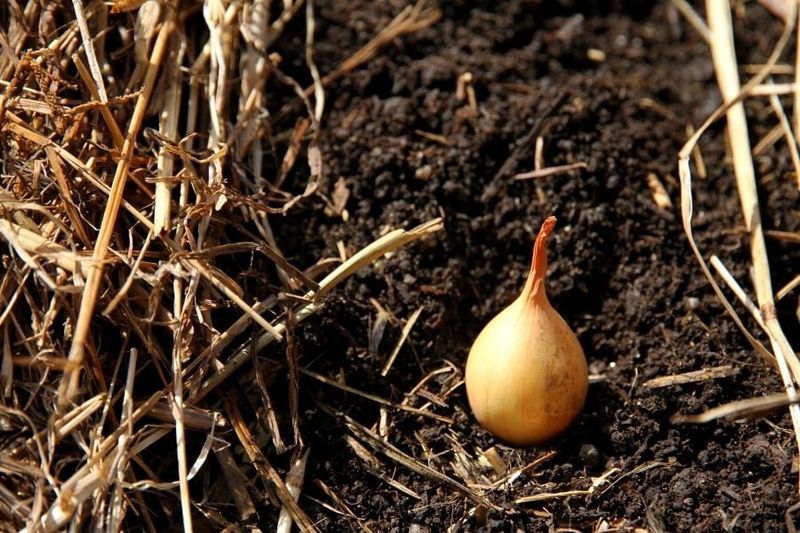
For most home gardeners working with standard yellow, red, or white onion sets, the math is straightforward: one set in, one onion out. An onion set is an immature bulb that was started from seed the previous season, dried down, and sold for replanting. Its job is to resume growth and swell into a single, full-sized bulb by the end of the season.
University of Illinois Extension recommends placing dry onion sets roughly 2 to 4 inches apart in the row, while transplants often do best at 3 to 5 inches apart for the largest bulbs. Crowding is the most common spacing mistake – when sets are too close together, the plants compete for water and nutrients and produce smaller bulbs. Giving each set its own space is the simplest way to encourage a satisfying harvest.
A regular grocery-store onion is not a reliable substitute for a labeled set. Extension sources treat ordinary onion sets as single-bulb planting material, and there is no dependable evidence that a supermarket yellow onion will divide into a cluster of marketable bulbs. University of Maryland Extension is clear that common onions are single-bulb plants, which is a fundamentally different growth habit from the cluster-forming types covered in the next section. If your goal is multiplication, you need different planting stock entirely.
True shallots and multiplier onions can form clusters
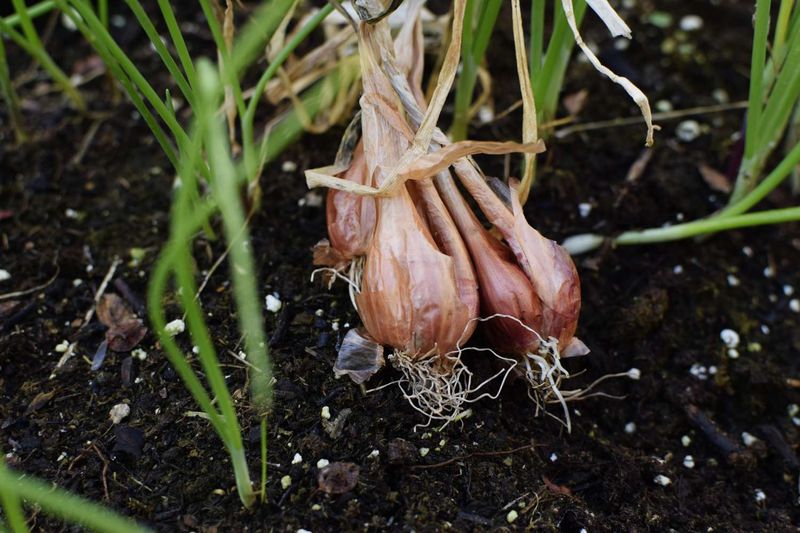
Shallots and multiplier onions work on a different principle than common onions. Instead of channeling energy into one enlarging bulb, a planted shallot clove or multiplier bulb divides laterally underground, producing a ring of new bulbs around the original planting site. Pull one up at harvest and you may find several bulbs where you planted just one.
University of Maryland Extension notes that shallot bulbs may contain roughly 2 to 6 cloves depending on the variety, which means the planted unit is already a multi-clove structure rather than a single undivided bulb. That detail matters when interpreting harvest counts, as discussed in the next section. Utah State University Extension’s shallot guide reports that widely spaced shallots may produce clusters of 10 to 15 bulbs under favorable conditions.
That upper-end figure deserves a clear qualifier. A cluster of 10 to 15 bulbs is a condition-dependent result reported for shallots given generous spacing, not a standard outcome across all cultivars or growing environments. Closer spacing, a less vigorous cultivar, poor soil, or inconsistent watering can all reduce the cluster to just a handful of bulbs or fewer. Multiplier onions, also called potato onions, follow similar cluster-forming behavior, though the typical cluster size varies by type.
Think of 10 to 15 as a ceiling worth aiming for under good conditions, not a floor you can count on regardless of how you plant.
Count the original cloves before calling it multiplication
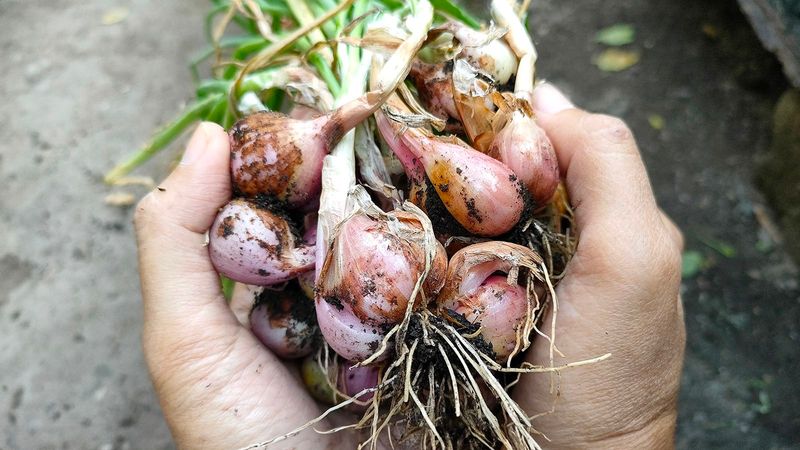
Shallot harvests can look dramatic on paper. Plant one bulb, pull up twelve – that ratio sounds almost magical. The catch is that the “one bulb” you planted may have already contained four, five, or six separable cloves before it ever touched the soil. University of Maryland Extension notes that shallot bulbs typically hold 2 to 6 cloves depending on variety, so counting the whole intact bulb as a single unit and then marveling at the multiplication can overstate how much true vegetative division occurred.
A more honest accounting compares the number of cloves planted against the number of bulbs harvested. If you planted a bulb with four cloves and each clove produced three new bulbs, you harvested twelve – a real and useful result, but a 3-to-1 ratio per clove rather than a 12-to-1 ratio per bulb. Keeping that math straight helps you set realistic expectations and plan how much space to allocate next season.
Propagation method also changes the picture. Utah State University Extension explains that each shallot seed produces one bulb, while bulb-set shallots are the ones that form clusters. So “shallots multiply” is only accurate for bulb-set propagation. Grocery-store shallots and ambiguously labeled shallot-like onion cultivars do not guarantee the same cluster-forming behavior as a named, true shallot purchased from a reputable seed supplier or extension-recommended source.
Separate and plant each cluster-forming bulb
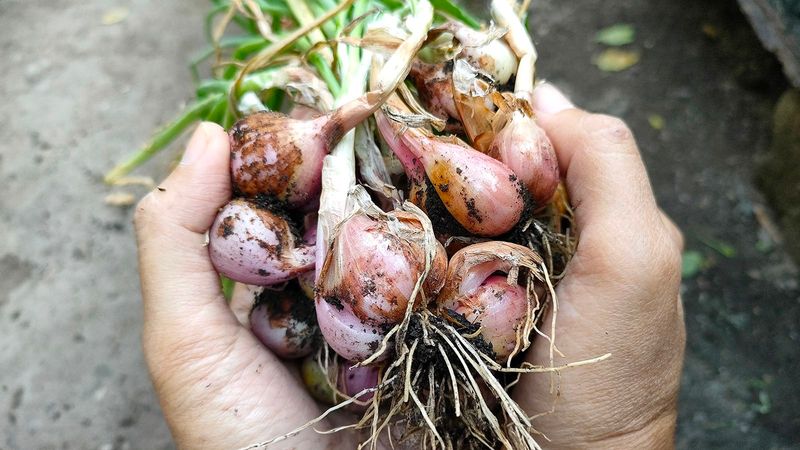
Getting a good cluster harvest from shallots or multiplier onions starts with how you prepare the planting material. Buy stock that is clearly labeled as a true shallot, multiplier onion, or potato onion from a garden center or seed supplier. Avoid planting an intact multi-clove shallot bulb as one unit – separating the cloves before planting gives each one room to develop its own cluster rather than competing with its neighbors from the start.
Utah State University Extension recommends planting shallot cloves about 1 to 2 inches deep and roughly 3 to 6 inches apart, with the pointed end facing up. Spacing influences both cluster formation and individual bulb size, though the direction and magnitude of that effect can vary by cultivar and growing conditions. In general, tighter spacing tends to produce fewer or smaller bulbs, while more generous spacing gives each clove room to divide and fill out. University of Arkansas Cooperative Extension guidance on shallots reinforces planting cloves individually rather than as a cluster for the best results.
For ordinary onion sets, the approach is simpler: one set per planting position, placed at the depth recommended for your type and region. Avoid burying onion sets too deeply, since excessive soil coverage can encourage stem rot rather than healthy bulb development. The contrast between these two methods comes down to what you want at harvest: one large bulb or a cluster of smaller ones.
Manage water, weeds, and day length for better bulbs
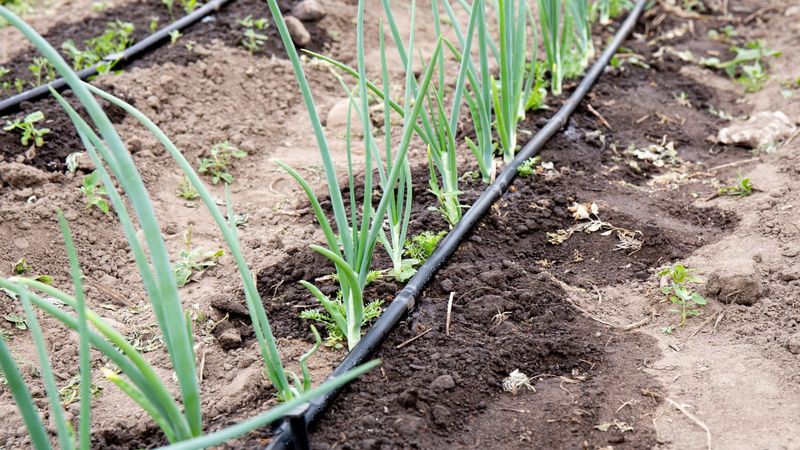
Even the best planting stock cannot overcome poor growing conditions. Onions are shallow-rooted plants, which makes them more vulnerable to both drought stress and weed competition than many other vegetables. Getting the environmental details right is what turns a decent planting into a genuinely productive one.
Consistent moisture during active leaf and bulb growth is essential. Utah State University Extension’s onion irrigation guidance notes that inadequate water during the growing period can trigger premature bulbing, which cuts the season short and limits final bulb size. As the tops begin to yellow and fall over – a sign that the bulbs are maturing – you can reduce regular irrigation and allow the soil to dry down before harvest.
Weed control deserves equal attention. University of Minnesota Extension advises using shallow cultivation or a suitable mulch to keep weeds down without damaging the onion’s shallow roots. Aggressive hoeing near the base of the plant can sever feeder roots and set back growth at a critical time.
Day length is the trigger that tells onions when to start forming a bulb rather than more leaves. University of Illinois Extension explains that long-day onions are suited to northern US gardens, short-day onions to southern gardens, and intermediate types to the middle latitudes. Planting the wrong type for your region may result in bulbs that stay small or fail to form properly, regardless of how well you water and weed.
Harvest and cure the cluster before saving bulbs
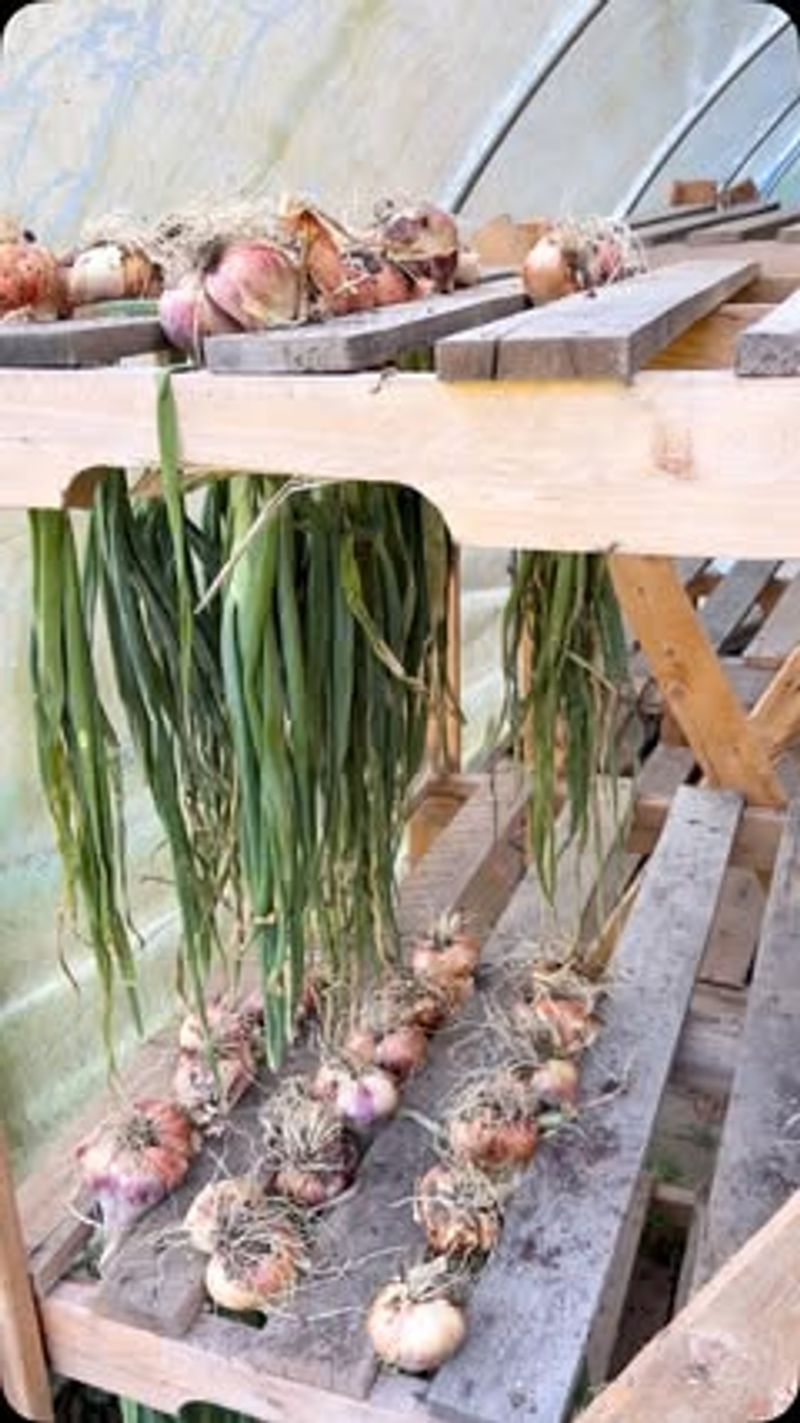
Timing the harvest correctly keeps all the work you put into the growing season from going to waste. For both shallots and multiplier onions, the signal to harvest is when the tops fall over naturally and begin to dry out. Pulling the bulbs too early – before the skins have tightened – shortens their storage life considerably.
Utah State University Extension recommends curing shallots for roughly 1 to 2 weeks in a dry, well-ventilated spot out of direct sun until the outer skins and attached leaves are fully dry. Lift the clusters gently with a fork rather than pulling by the tops to avoid bruising the bulbs or breaking the neck, which can invite rot during storage.
Once cured, separate the cluster into individual bulbs. RHS guidance on growing shallots suggests inspecting each bulb at this stage, setting aside any that are soft, damaged, or showing signs of disease. Sound, firm bulbs can go into storage for kitchen use or be reserved as planting stock for next season. Keeping track of which bulbs came from which planted clove gives you useful data for adjusting spacing or variety selection the following year.
Choose the right planting stock for the result you want
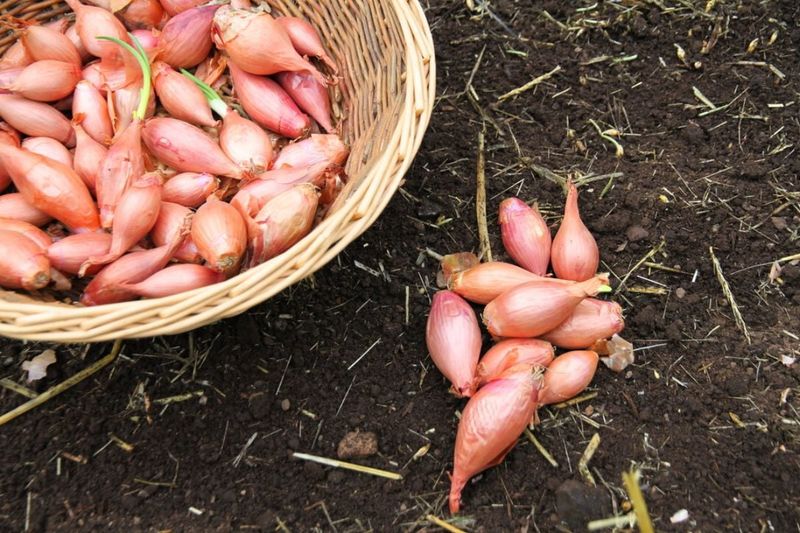
The practical decision is simpler than the botany suggests. When you want one large, full-sized onion, reach for a standard onion set – a labeled yellow, red, or white variety suited to your region’s day length. Plant one set per position, give it adequate spacing, and expect one bulb at harvest.
When you want a cluster, choose planting stock clearly labeled as a true shallot or multiplier onion, separate the cloves before planting, and follow the spacing guidance that fits your cultivar. Utah State University Extension’s planting guide and their shallot-specific resource both provide reliable starting points for spacing and depth. A cluster of several bulbs is a realistic outcome; the reported upper end of 10 to 15 bulbs is condition-dependent and not a promise for every planting.
Before adjusting your spacing or questioning whether your crop multiplied normally, confirm what you actually planted. The type of planting material is the most important variable, and matching it to your harvest goal is the clearest path to a result you can count on.