
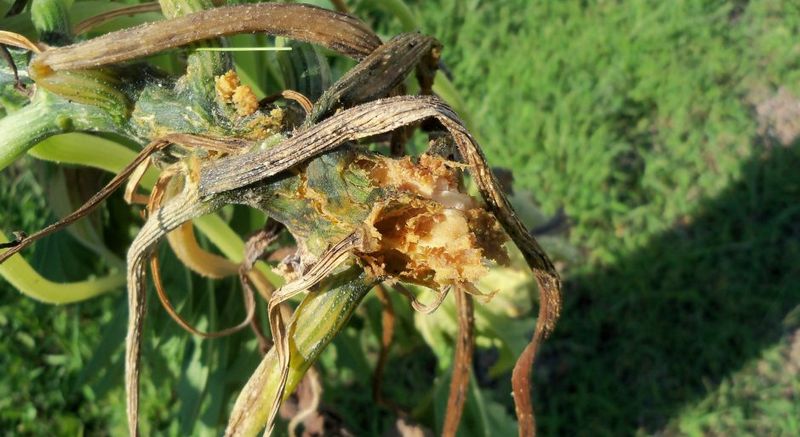
Walking out to your garden and finding a zucchini or pumpkin vine suddenly flopped over is one of the more alarming sights of the warm-season garden. When you also spot a small hole near the base of the stem and a wet, sawdust-like pile of frass nearby, squash vine borer is the leading suspect.
This pest tunnels through the stem from the inside, cutting off the plant’s water supply before most gardeners realize anything is wrong. Knowing what to look for and how to act quickly can mean the difference between saving a plant and losing it entirely.
Wilt, a Stem Hole, and Frass Are Strong Clues
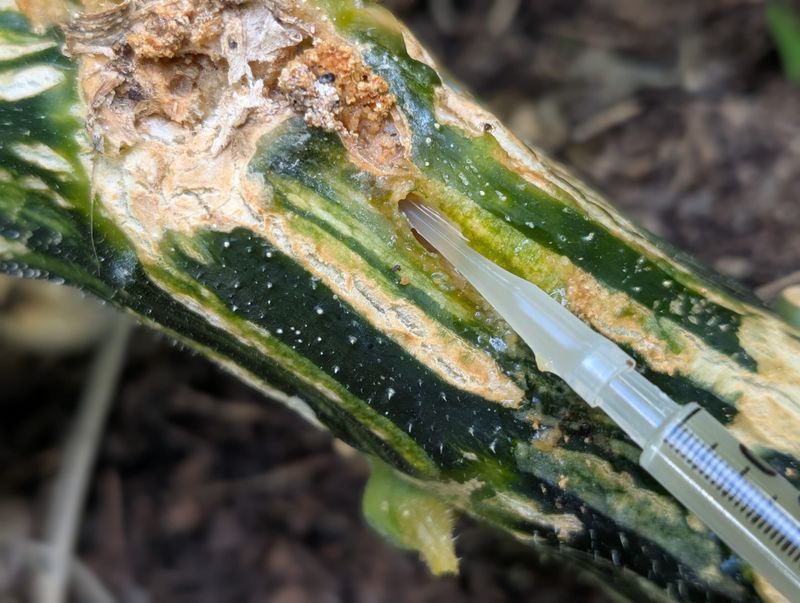
Seeing a squash or pumpkin vine droop suddenly in the garden is alarming enough on its own, but finding a small hole near the base of the stem alongside a wet, sawdust-like frass pile changes the picture considerably. That frass, which may appear greenish, orange, brown, or even jelly-like, is pushed out of the stem by a larva feeding inside.
The pest responsible is the squash vine borer, Melittia cucurbitae, a moth whose larvae tunnel through the lower stem and disrupt the plant’s ability to move water upward.
Zucchini, summer squash, winter squash, and pumpkins, all members of the Cucurbita genus, are the crops most commonly affected. Once a larva is established inside the stem, the plant may wilt first during the hottest part of the day and then remain wilted even in the morning as damage progresses.
University of Minnesota Extension guidance on squash vine borers and University of Georgia Cooperative Extension troubleshooting resources both identify wilting combined with stem holes and frass as characteristic signs of this pest.
That combination is meaningfully more informative than wilt alone. Still, frass and a hole are strong clues, not proof.
Before committing to a treatment plan, inspect the stem directly to confirm what you are dealing with rather than assuming the diagnosis is settled.
Heat and Other Problems Can Also Cause Wilting
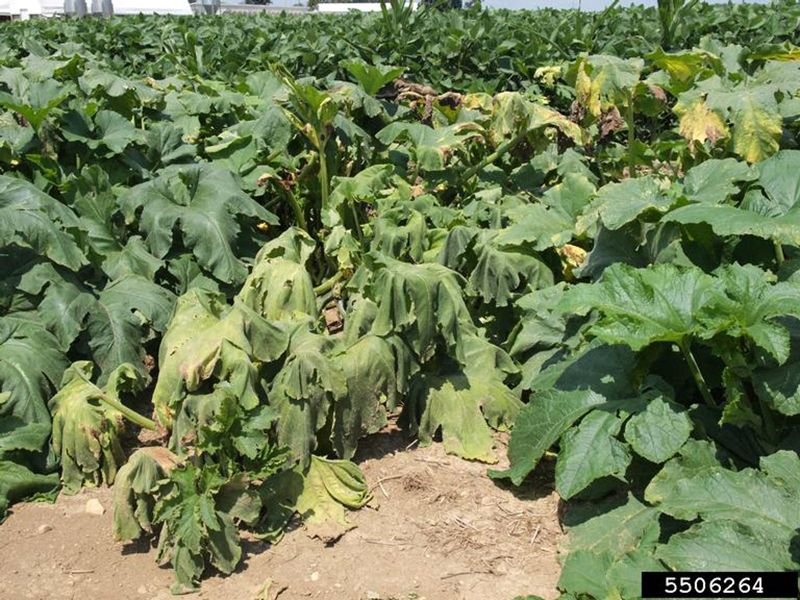
A squash plant that droops in the afternoon heat and then perks back up by morning is often reacting to nothing more than heat stress or inconsistent watering. That pattern is worth watching, but it does not warrant alarm on its own.
Persistent wilting that carries into the morning, especially when paired with a stem hole and frass, is a much stronger reason to suspect squash vine borer. University of Minnesota Extension’s vegetable IPM updates reinforce that afternoon wilt without other symptoms often reflects heat or water stress rather than a pest infestation.
Squash bugs are another common cause of sudden wilting in Cucurbita crops. They feed by sucking sap and can transmit bacterial diseases, but they are typically visible on leaves, stems, or the undersides of leaves.
They do not produce a sawdust-like pile pushed from a stem tunnel. Oklahoma State University Extension’s alert on cucurbit yellow vine decline describes how squash-bug-associated disease can cause vine collapse that resembles other problems, making it easy to misattribute the damage.
Bacterial wilt, root diseases, and stem pathogens are additional possibilities worth ruling out when frass and an entry hole are absent. Cucumbers and melons are generally less susceptible to squash vine borer than Cucurbita crops, so a wilted cucumber with no stem frass should prompt a broader look at bacterial wilt, irrigation, or root disease first.
Regional timing also matters: UF/IFAS documentation on squash vine borer in Florida reports adult activity from mid-May through late October with potentially overlapping generations, while adult flight in more northern areas is often concentrated from late June into July. Do not assume the same seasonal window applies everywhere.
Inspect the Lower Stem to Confirm the Diagnosis
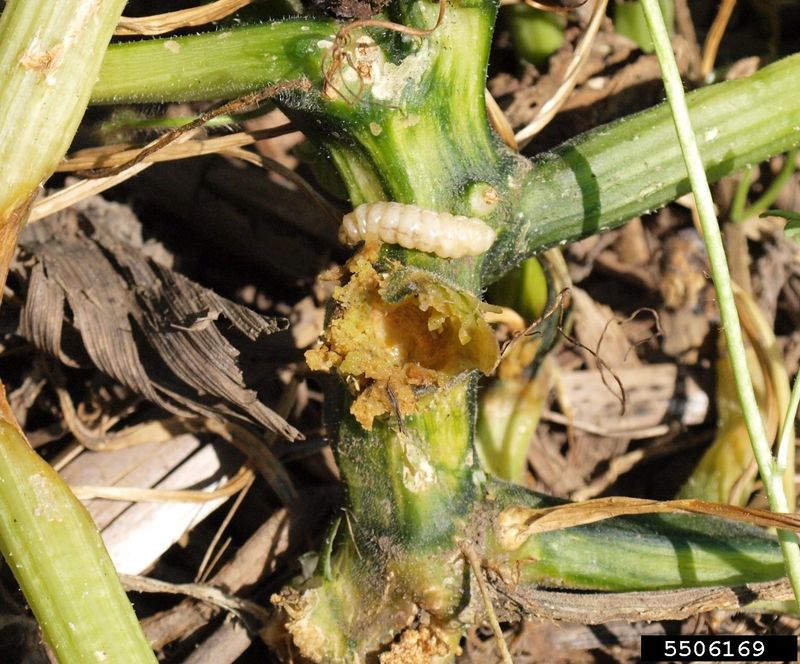
Before cutting into anything or reaching for a spray bottle, spend a few minutes at the base of the plant. Run your fingers along the lower stem and crown, looking for one or more small entry holes and moist frass nearby.
The frass can range in color from greenish to orange-brown and may have a wet or granular texture. Finding it tucked close to a hole is a much stronger confirmation than frass scattered loosely on the soil.
If a hole is present but you want to be certain a larva is inside, a careful lengthwise slit in the stem at that location can expose the pest. University of Minnesota Extension’s squash vine borer page and Purdue University Extension’s vegetable insect guide describe the larva as cream-colored with a brown head.
Seeing that larva confirms the diagnosis.
The inspection also helps you assess whether a rescue attempt makes sense. A plant with one or two small entry holes and firm, green stem tissue on either side of the damage is in a different situation than one where the main stem is soft, discolored, or riddled with multiple tunnels near the crown.
Extensive damage or signs of rot at the crown make recovery unlikely, and cutting into the stem further can worsen an already compromised plant. Confirm the pest and assess the plant’s actual condition before deciding on next steps.
Try a Careful Rescue Only When Damage Is Limited
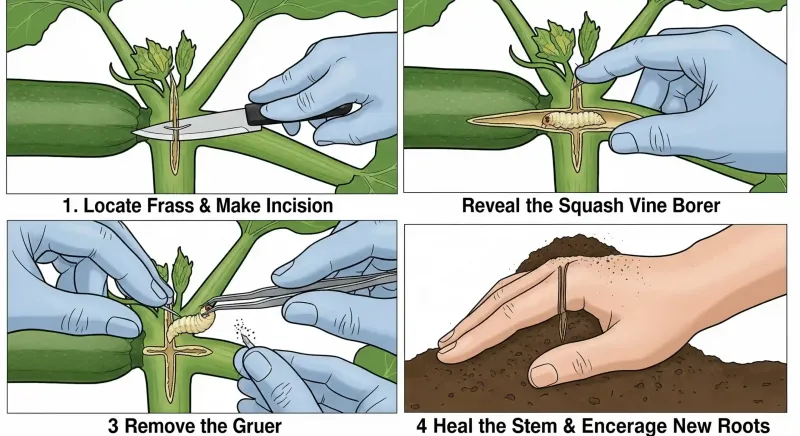
When the inspection reveals a single entry point, firm surrounding stem tissue, and no sign of crown rot, a mechanical rescue is worth attempting. Use a clean, sharp knife to make a careful lengthwise slit in the stem just above the suspected entry point, following the tunnel until you locate the larva.
Remove or kill it, then close the area as best you can and mound moist soil over the wound.
Keeping the buried section consistently watered gives the plant a chance to develop new roots along the covered stem. University of Minnesota Extension acknowledges this technique while noting that the plant may not survive.
UMN’s giant pumpkin growing guide similarly describes stem burial for damaged vines as a possible but uncertain recovery strategy. Approach it as a reasonable attempt, not a reliable fix.
Plants with extensive tunneling throughout the lower stem, a collapsed crown, or soft, discolored tissue at the base are unlikely to benefit from this approach. Cutting deeper into an already compromised stem can accelerate rot and stress the plant further.
If the damage is clearly beyond a localized rescue, remove the plant promptly rather than leaving it in place. Pulling a failing vine quickly is more useful than a rescue attempt that will not succeed, and it removes a larva that might otherwise complete its development and add to next season’s population.
Treat Before Larvae Enter the Stem
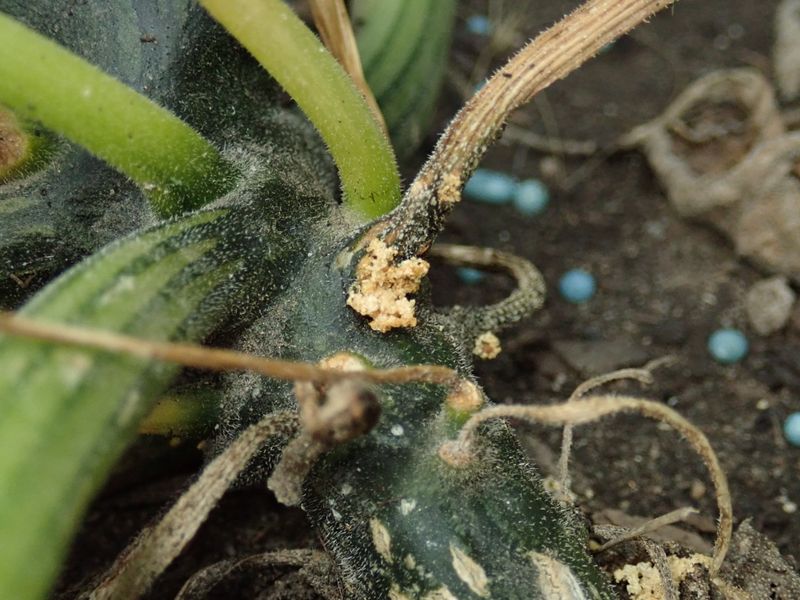
A plant already wilting from an established borer infestation is not going to be saved by a foliar spray. Once larvae tunnel inside the stem, they are physically protected from most insecticides applied to the outside of the plant.
Spraying at that stage generally wastes product, adds unnecessary chemical load to the garden, and does not address the larvae causing the damage.
UF/IFAS guidance on natural products for managing Florida garden pests explains that Bacillus thuringiensis var. kurstaki, commonly called Bt-k, must be ingested by a feeding larva to be effective and is not dependable against larvae already protected inside the vine. Bt-k has a role in organic pest management, but applying it after larvae have entered the stem is not a reliable rescue strategy.
Chemical control, when gardeners choose to use it, must be timed to target eggs or newly hatched larvae before they enter the plant. Any product used must carry a label that specifically permits its use on the crop and pest in question.
Active ingredients sometimes discussed in extension literature include permethrin, bifenthrin, carbaryl, and esfenvalerate, but registrations, harvest intervals, and permitted uses differ by state and product. Mississippi State University Extension’s squash vine borer newsletter and the 2024 Southeastern Vegetable Crop Handbook both emphasize following the current label as the legal and practical standard.
Never apply any pesticide to open squash flowers or during peak bee activity. Squash and pumpkins depend on bee pollination, and broad-spectrum insecticides can harm bees and other beneficial insects.
Evening applications, when pollinators are less active, are generally the safer window if treatment during bloom cannot be avoided. For most home gardeners, preventive insecticide applications are one option among several, not the automatic first choice.
Remove Infested Vines and Block the Next Generation
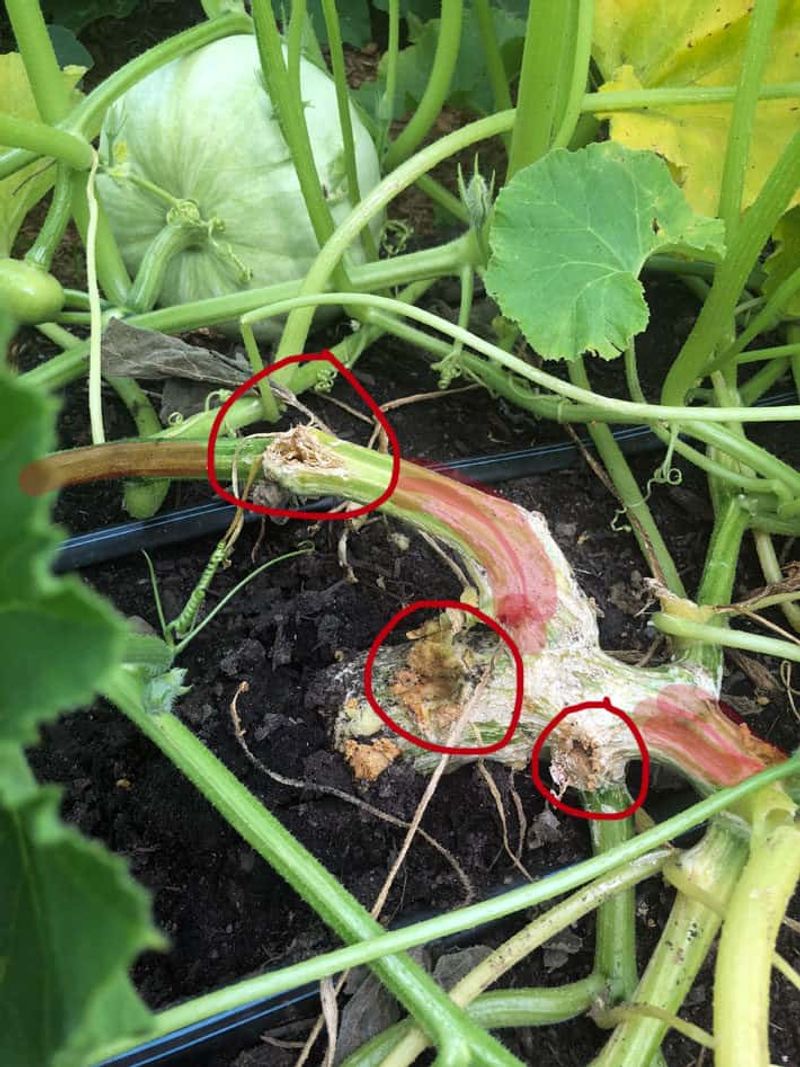
Once a plant is too far gone to rescue, pulling it promptly is the most useful thing a gardener can do. Squash vine borer larvae do not stay inside the plant indefinitely.
They eventually exit the stem and burrow into the soil to pupate, which means leaving dead or heavily infested vines in place simply gives larvae more time to complete development and add to the soil’s overwintering population.
Destroyed vines should be bagged and discarded rather than left on the ground or added to a home compost pile. Home compost rarely reaches the temperatures needed to kill insect pupae reliably, so infested material added to the pile can survive and emerge the following season.
UF/IFAS squash vine borer documentation notes that Florida gardeners may face adult activity from mid-May through late October, making consistent scouting throughout the growing season a practical necessity rather than an occasional task. Mississippi State University Extension’s home vegetable garden pest guide adds that midsummer-to-fall plantings can experience particularly heavy infestations in parts of the South.
Floating row covers, with edges secured to the ground, can block adult moths from reaching the stems during active flight periods. The critical trade-off is that covers must be removed when squash begins to flower so bees can pollinate the crop.
University of Minnesota Extension also cautions against covering crops in the same location where infested vines grew the previous year, because pupae already in that soil may emerge beneath the cover. Purdue University Extension’s vegetable insect guide supports early or staggered planting, rotation away from previously infested beds, and selecting less-susceptible varieties such as butternut squash as practical risk-reduction measures, though none of these steps guarantees a borer-free season.
Use Frass as the Trigger for Immediate Action
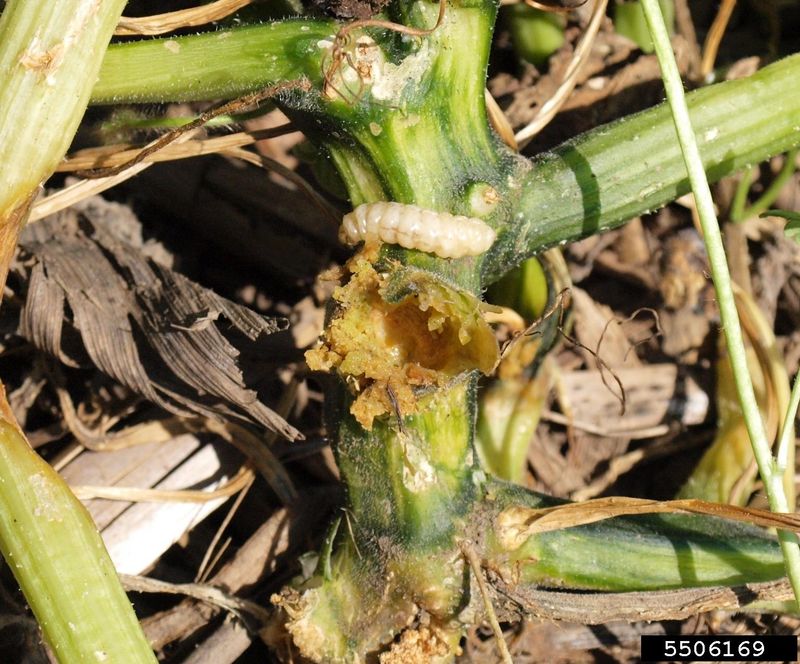
Afternoon wilt on a hot day may reflect nothing more than heat and uneven watering, especially if the plant recovers fully by morning. Wilt that persists into the morning hours, paired with a visible stem hole and wet frass, calls for a closer look right away.
Those two details together, rather than wilt alone, are what make squash vine borer the leading explanation worth acting on.
When you find that combination, inspect the stem before doing anything else. Attempt a rescue only if damage is clearly limited to a small, localized section of the vine.
Remove plants that cannot reasonably recover, and dispose of them away from the garden and away from the compost pile. University of Minnesota Extension and UF/IFAS squash vine borer research both support scouting, exclusion, sanitation, crop timing, and rotation as the foundation of long-term risk reduction.
Keep in mind that adult flight periods differ by region, so the window of concern is not the same everywhere. Sprays applied after larvae are inside the stem will not reach them.
The frass pile is the signal to stop guessing and start looking, because the sooner you confirm what is happening inside that stem, the more options you still have.