
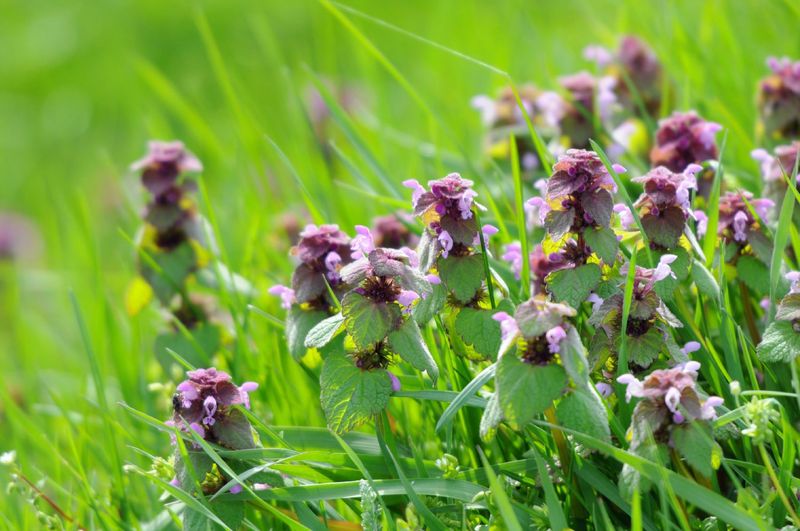
You know that little purple flower popping up all over your yard every spring? Before you reach for the weed killer, take a closer look. That plant is most likely a Texas native that helps bees, feeds wildlife, and even adds color to your lawn for free. Let’s find out why this “weed” deserves a spot in your yard instead of the trash can.
1. Texas Bluebonnet: The State’s Beloved Bloom

Nothing says spring in Texas quite like a hillside covered in bluebonnets. These purple-blue beauties are actually the official state flower, and folks drive for miles just to snap photos of them.
Growing wild without any help from you, they toughen up poor soil and feed hungry bees. Instead of yanking them out, let a patch grow and enjoy a free flower show that generations of Texans have treasured every single year.
2. Henbit: Tiny Purple Powerhouse for Pollinators

Bees absolutely adore henbit, one of the first purple bloomers to show up when winter loosens its grip. Its little tube-shaped flowers offer some of the earliest nectar of the season.
You might see it as a pesky lawn invader, but hungry pollinators see a lifesaving buffet. The leaves are even edible for people, tasting mild and slightly sweet. Leave a few clumps alone and you’ll help the bees kick off their busy year strong.
3. Purple Deadnettle: The Misunderstood Healer

Don’t let the scary name fool you, purple deadnettle won’t hurt a thing. It’s called “dead” nettle because, unlike stinging nettle, it can’t sting you at all.
Herbalists have used this fuzzy-leaved plant for ages to soothe scrapes and calm allergies. Rabbits and bees both stop by for a snack, too. Rather than treating it like an enemy, appreciate this gentle helper that quietly supports the little critters sharing your Texas yard.
4. Wild Violet: A Woodland Charmer in Your Grass

With heart-shaped leaves and dainty purple petals, wild violets look like something out of a fairy tale. They thrive in shady, damp corners where regular grass struggles to grow.
Here’s a fun fact: the flowers and leaves are packed with vitamin C, and people have tossed them into salads for centuries. Butterflies lay eggs on them, making violets a nursery for future fliers. Let them spread and enjoy a shady spot full of life.
5. Texas Verbena: Sprawling Splashes of Color

Prairie verbena spreads across the ground like a purple carpet, and it barely asks for a drop of water. This tough native laughs at the brutal Texas heat that wilts fussier plants.
Its rounded flower clusters bloom for months, drawing in butterflies from all around the neighborhood. Gardeners actually pay good money for plants like this, yet here it is growing free in your yard. Give it room and it rewards you with endless color.
6. Ground Ivy: The Fragrant Carpet Crawler

Crush a leaf of ground ivy and you’ll catch a minty, herby scent that early settlers once used to flavor drinks. This low creeper hugs the soil and stays green when many plants brown out.
Small purple blooms appear in spring, giving bees an easy landing pad. It fills bare patches where grass won’t cooperate, cutting down on muddy spots. Think of it as a fragrant living mulch instead of a stubborn nuisance.
7. Widow’s Tears: The Morning Marvel

Blink and you might miss the show, because widow’s tears open their vivid purple petals for just one morning before melting away by afternoon. That fleeting beauty gives the plant its poetic name.
Native across Texas, this dayflower shrugs off drought and keeps producing fresh blooms day after day. Bees rush to visit before the flowers close up. Wake early, wander your yard, and catch a tiny daily miracle most people never notice.