
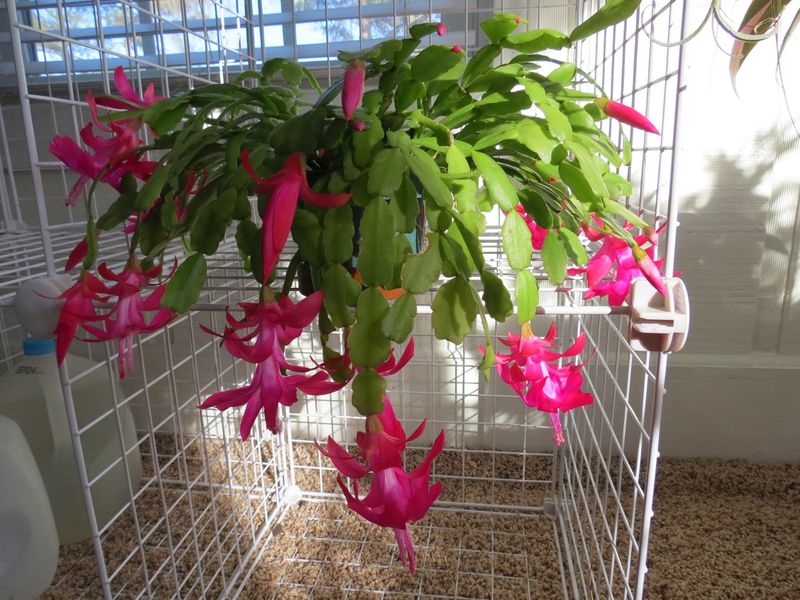
A holiday cactus branch snaps off the plant, and most of us toss it in the trash. That broken piece may be a chance to grow a brand-new plant for free.
With a few simple steps and some patience, many North Carolina gardeners can turn a healthy segment into a windowsill plant. Here is how to give it a fair shot, and what to expect along the way.
That snapped piece may be a cutting—not necessarily a rooted plant
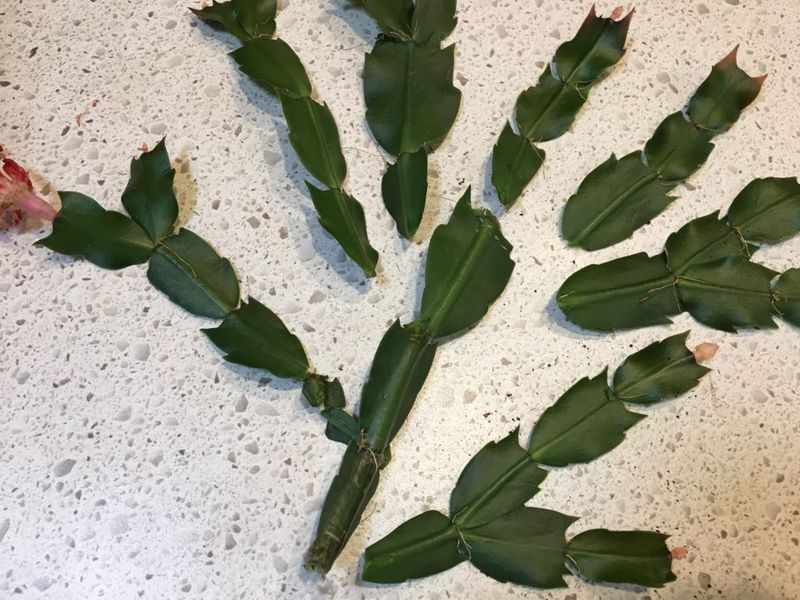
That snapped piece is a potential cutting, not necessarily a rooted plant. A healthy, multi-segment piece of holiday cactus can grow into a new plant, but unless you can see roots on it, do not assume it has any.
Not every cutting will succeed, so think of the effort as a good bet rather than a sure thing.
Many plants sold as Christmas cactus are really Thanksgiving cactus or hybrids. NC State Extension’s Christmas cactus profile and UConn’s holiday cacti fact sheet both describe the difference.
Thanksgiving cactus segments tend to have pointed, claw-like edges. True Christmas cactus segments are generally smoother and scalloped.
Segment shape gives you a clue, but it is not a perfect test, because hybrids and cultivars vary. The type can affect when your plant blooms, so a plant sold as a Christmas cactus may flower closer to Thanksgiving.
You do not need to name your plant exactly to try propagation.
Some holiday cactus segments can grow new roots, as University of Wisconsin Extension notes, but a newly snapped piece has to prove it. Give it a chance and check for roots later instead of guessing.
Start with a sound, multi-segment piece
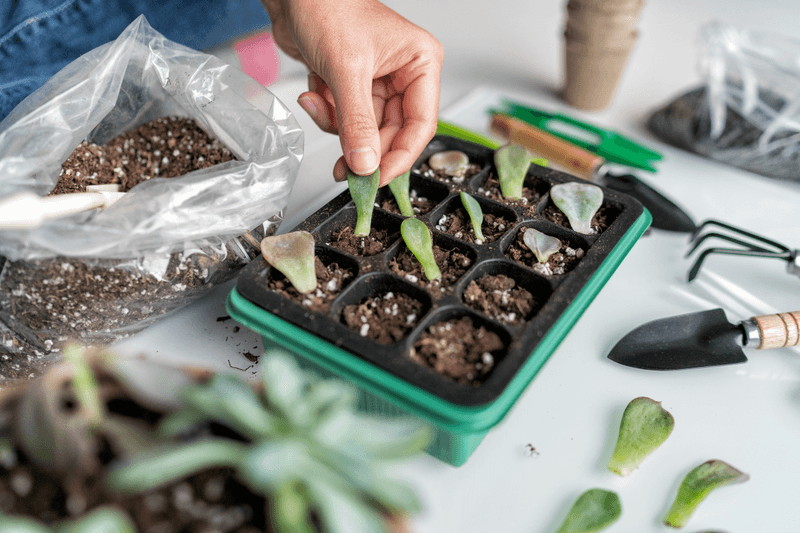
Look over the broken piece before you plant it. You want a healthy, firm, green section with several intact segments.
Guides commonly suggest about two to five segments, and Iowa State Extension and other extension guides lean toward three to five. Shriveled, mushy, or discolored pieces are poor candidates.
Extension guides differ a little on what comes next. Iowa State and UConn recommend letting a fresh cutting dry overnight so the cut end can form a callus.
Tennessee Extension says a cutting may be planted right away.
Both are accepted methods, so pick one and stick with it. If your piece snapped off a few hours ago, you do not need to throw it out or leave it sitting for days.
Letting it rest overnight on a dry paper towel is plenty if you choose the drying route.
If a stem has only one or two segments, you can still try it, though a longer piece gives you better odds. Saving a few pieces at once is a smart way to improve your chances.
Plant it in a draining, lightly moist medium
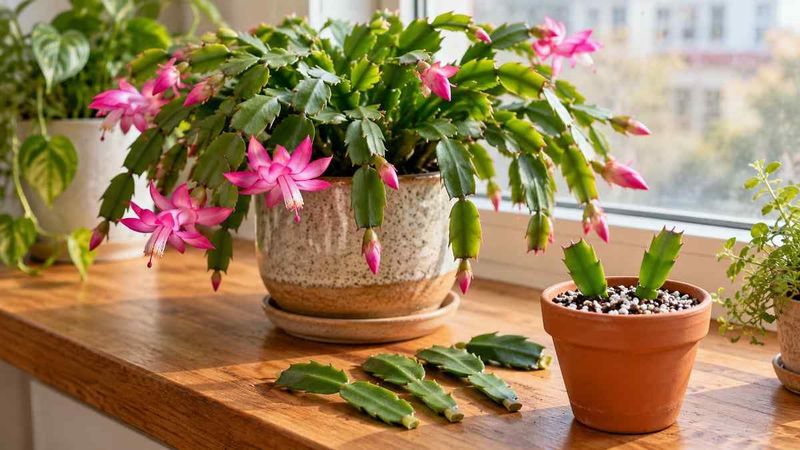
Grab a small container with drainage holes. Water has to be able to escape, or the cutting may rot before it grows roots.
A plastic pot or a terracotta pot both work well.
For the planting mix, UConn’s fact sheet points to moist perlite or vermiculite. Wet the medium first, then let the extra water drain so it feels damp but not dripping.
Push the cut end in about an inch deep. Firm the medium gently around the stem so the piece stands upright.
If it flops, a couple of toothpicks or a small stake can help hold it steady.
Holiday cactus is not a desert cactus, so do not keep the mix bone-dry. Aim for lightly moist, like a wrung-out sponge.
Iowa State Extension notes that excess moisture can lead to rot, so a soggy pot is a bigger danger than a slightly dry one at this stage.
Label the pot with the date. That small note helps you keep track of how many weeks have passed.
Give roots time before potting up
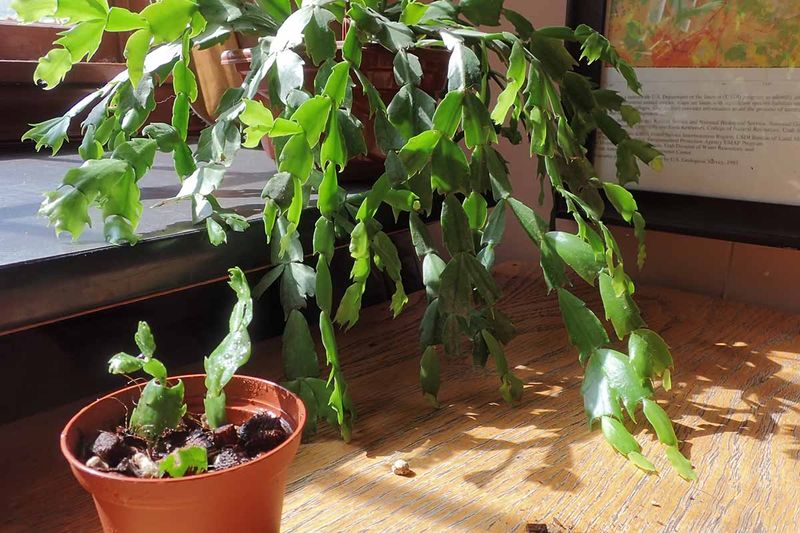
Patience is the main job now. Set the pot where it gets bright, indirect light, and keep the medium lightly moist without letting it turn soggy.
A spot near a window with a sheer curtain works well.
Iowa State Extension reports that roots commonly form in six to eight weeks. Some cuttings may take longer, and some may fail, which is normal with any propagation project.
Do not assume your cutting has rooted just because it still looks green. UConn advises checking after a few weeks and potting the cutting individually once roots are at least an inch long.
A gentle tug that meets slight resistance is a good sign, and new growth at the tip is another clue.
When you do pot it up, choose a small pot with fresh, well-drained mix. UF/IFAS Extension also stresses a well-drained setup for holiday cactus.
If the stem turns dark and mushy instead, discard it and start over with another piece.
The North Carolina windowsill

A bright window is the best home for your new plant, as long as the light is indirect. Harsh direct sun can scorch the segments, so pull the pot back from the glass or use a sheer curtain on strong afternoon exposures.
If your plant spends summer on a porch or patio, plan ahead for cooler weather. NC State Extension advises bringing holiday cactus indoors before temperatures fall below about 50°F.
Freezing temperatures can damage it, so do not wait for a frost warning.
Cold air near a window can be a problem too. Keep the plant away from drafty glass, doors, and vents that blow hot or cold air.
UConn’s fact sheet supports giving holiday cacti steady, moderate indoor conditions.
Night temperatures in North Carolina can swing quite a bit from the mountains to the coast. Watch your own thermometer rather than the calendar, and move the pot inside whenever a cold night looks possible.
Will it bloom by next holiday season?
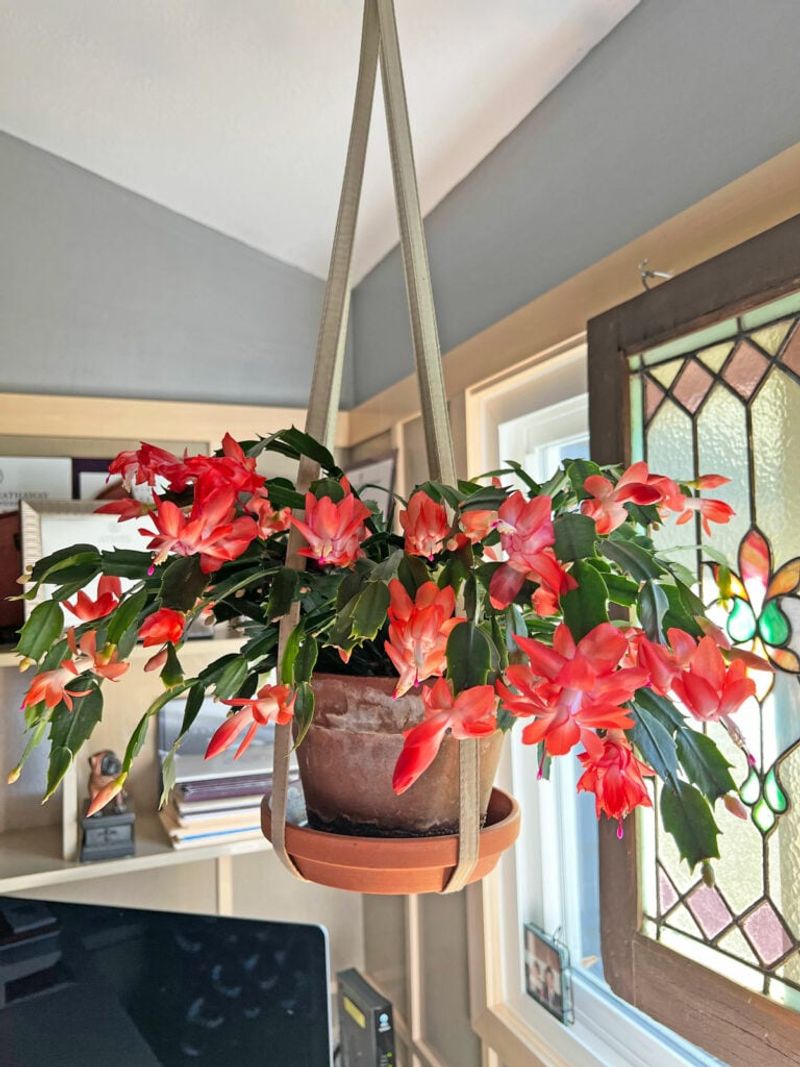
Possible, yes. Guaranteed, no. A young plant grown from a small cutting may need time to mature, and plant type matters too, since a Thanksgiving cactus or hybrid may flower on a different schedule than a true Christmas cactus.
What helps buds form is long, uninterrupted nights and cool nighttime conditions. NC State Extension advises at least 13 hours of uninterrupted darkness.
UConn gives a range of 12 to 14 hours of darkness for four to five weeks, or nighttime temperatures around 55°F.
Artificial light at night can interrupt that dark period. A lamp in the same room or a porch light shining through the window may be enough to cause trouble, so place the plant where evening lights will not reach it.
None of these conditions promises flowers. They simply improve the odds.
UConn also notes that a plant’s typical bloom time in your home may not be clear until the following year, and Iowa State Extension describes propagation as easy but gradual. If buds do appear by next season, count it as a bonus.
A small cutting can still make a thoughtful gift
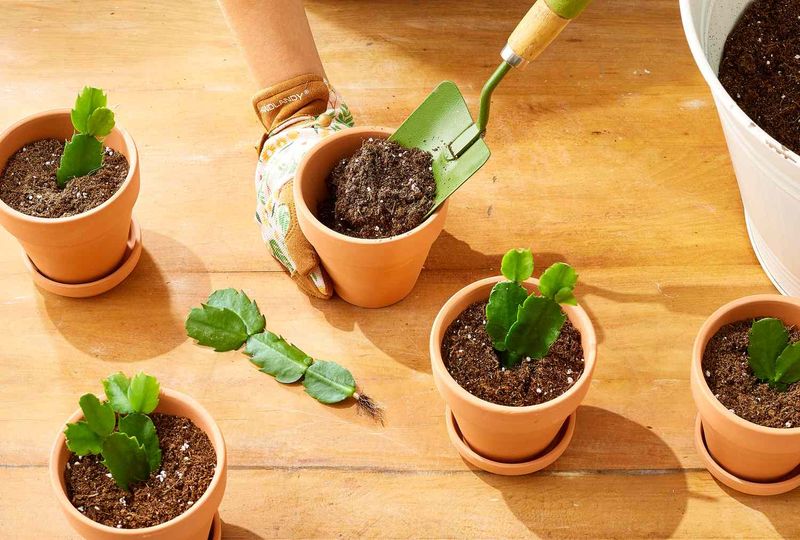
A snapped branch does not have to end up in the trash. Save a healthy piece, follow the rooting steps, and give the new plant time to settle in and grow.
UConn’s guidance and Iowa State’s guide both treat propagation as a doable home project.
A bloom by next holiday season is a possibility, not the measure of success. A healthy rooted plant is already a nice thing to hand a neighbor.
Sometimes the best gifts start as a mistake.