

Spotting a fox trotting across your yard can stop you in your tracks, especially when kids or pets are nearby. Most homeowners have no idea whether to shout, run inside, or just watch, and that split-second confusion can lead to mistakes that put people and animals at greater risk.
Knowing what to do before it happens makes the whole encounter calmer and safer for everyone involved.
Let a fox that is leaving cross the yard
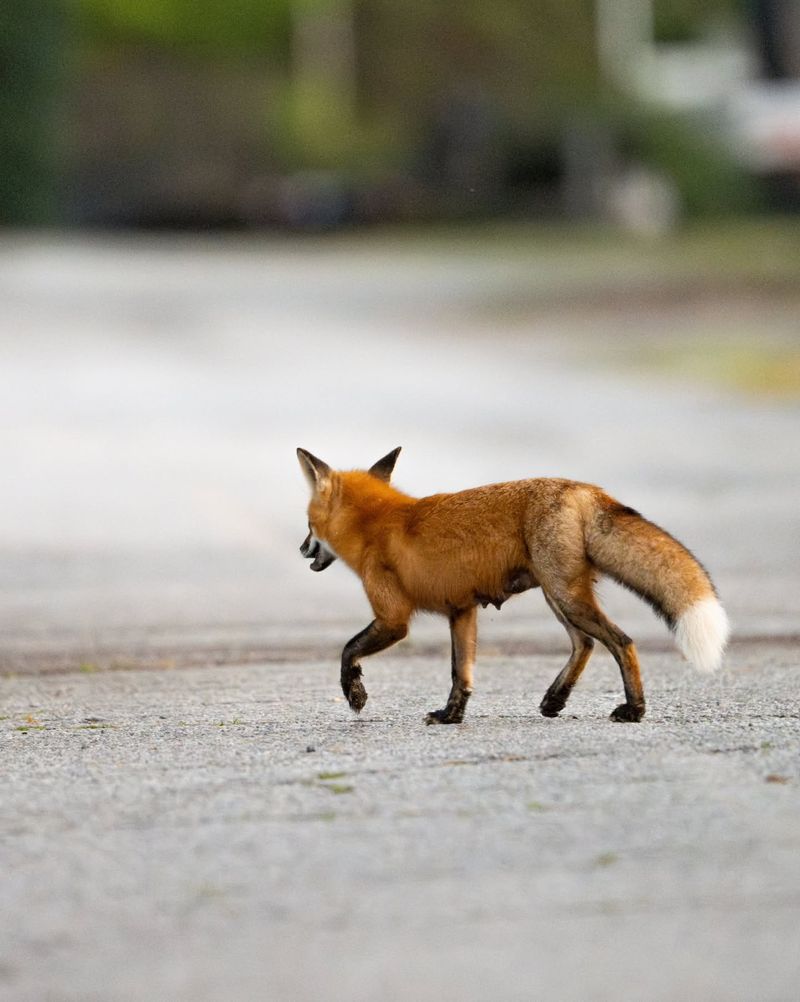
Your first move when a fox appears is also your simplest one: stop moving and keep your distance. If the fox is already heading toward the tree line, the fence, or the far edge of the yard, your job is to stay back and let it go.
Chasing it, cutting it off, or trying to get a closer look turns a routine crossing into a confrontation that benefits no one.
Bring children and pets in close or indoors while the fox finishes its path, but resist the urge to rush or shout. Quick movements can startle the animal and cause it to freeze, circle back, or feel cornered.
Utah State University Extension guidance on fox encounters consistently points to calm separation as the safest first response, and that principle holds whether the animal is in a rural field or a suburban backyard in North Carolina.
One thing worth understanding right away: physical proximity without contact is not itself a rabies exposure. CDC information for veterinarians on rabies exposure draws a clear line between being near a wild animal and having actual contact with its saliva, a bite, or a scratch.
Getting closer raises the chance of the kind of contact that does matter, which is exactly why distance is the right call.
A fox that is moving away from you is giving you the easiest possible outcome. CDC wildlife guidance for pet owners reinforces that people should not approach, chase, or attempt to handle wild animals.
Let the animal clear the yard on its own terms, then take stock of the situation once it is gone.
Children and pets change the first move

When children or pets are outside, the priority shifts from watching the fox to moving people and animals toward safety before anything else. A fox that is simply passing through may not give the yard a second look, but kids and dogs do not always read the situation the same way.
A child running toward the fox out of curiosity or a dog lunging at it can turn a calm crossing into a risky one in seconds.
Call children to you calmly and walk them inside or to a safe spot near the door. For dogs and cats, do not let them approach or investigate the fox.
CDC guidance on pets and wildlife advises supervising pets outdoors and keeping them from making contact with wild animals, which protects both the pet and the animal it encounters.
Vaccination is a key part of that protection. North Carolina Department of Agriculture veterinary FAQ confirms that dogs and cats at least four months old are required by state law to be vaccinated against rabies.
Keeping those records current matters not just for compliance but because vaccination status affects how a potential exposure is handled if something does go wrong.
Being vaccinated does not mean a pet can safely tangle with a fox, though. Vaccination reduces risk; it does not eliminate the need for distance or professional advice after a bite or scratch.
Treat a current shot record as a safety net, not permission to let the encounter play out up close.
Daylight alone is not the warning sign

Seeing a fox in broad daylight does not mean something is wrong with it. Foxes hunt mice, voles, and other small prey during daylight hours, and a mother fox raising a litter in spring or early summer may be out foraging at almost any hour.
Daytime activity by itself is a poor signal for judging whether an animal is sick.
The more reliable screen is behavior. Massachusetts wildlife guidance on fox behavior distinguishes normal fox activity from the kinds of signs that warrant concern: unprovoked aggression, repeated attempts to approach or bite, staggering, disorientation, apparent paralysis, seizures, or excessive salivation.
A fox that pauses to sniff the air, trots across the lawn, and disappears into the brush is behaving like a fox. A fox that staggers in circles, cannot retreat when given the chance, or walks up to a person without any apparent wariness is showing something different.
The Humane Society’s wildlife conflict resolution guide makes the same point plainly: behavior matters more than the time of day. Unusual tameness, the inability to walk normally, or unprovoked aggression toward people or objects are the red flags, not a sunny-afternoon sighting.
North Carolina does have documented wildlife rabies risk. NC Wildlife Resources Commission 2025 surveillance data recorded 39 rabies-positive foxes, 89 raccoons, and 61 skunks, with positive terrestrial-wildlife cases confirmed in 44 of 100 counties.
That context supports taking abnormal fox behavior seriously and reporting it promptly. It does not mean every fox crossing a yard is an emergency.
NC Department of Agriculture animal health fact sheets and CDC clinical guidance on rabies both emphasize that the pattern of behavior, not a single data point like the hour of the sighting, is what helps distinguish a healthy fox from one that needs to be reported.
If it approaches, make space without running

A fox that turns toward you, follows you, or refuses to leave when given space calls for a different response than one that is already heading away. Running is the wrong move.
Quick retreat can trigger a pursuit response in many animals, and turning your back removes your ability to track what the fox is doing. Face the animal instead.
Stand tall, wave your arms wide, and use a firm, loud voice. Clapping, yelling, or banging objects together can all work.
Wisconsin Humane Society guidance on foxes and coyotes recommends this kind of hazing for bold animals that have come too close, and the HSUS wildlife conflict resolution guide describes hazing as a noninjurious way to reinforce the fox’s natural wariness of people.
A garden hose or a spray bottle can be used from a safe distance if the fox does not respond to noise alone. The goal is to make the encounter unpleasant enough that the fox chooses to leave, not to injure it or chase it.
Never corner the animal or position yourself so that it has no clear exit. A fox with no escape route is more likely to bite than one that can simply walk away.
USU Extension’s fox encounter recommendations note that hazing should continue only as long as needed to move yourself toward safety. Back away slowly while still facing the fox, keep making noise if it keeps advancing, and reach a door or a vehicle without turning and running.
Once you are inside, the encounter is over on your end. If the fox continues to approach the structure or shows no sign of retreating, that behavior crosses into the territory covered in the section on when to call for help.
Remove what turns a visit into a habit

After a fox leaves the yard, the practical question becomes whether anything in that yard is likely to bring it back. Foxes are opportunistic, and yards that offer easy food or reliable cover can shift from a one-time crossing route to a regular stop on an animal’s territory.
The good news is that most of the attractants are easy to address once you know what to look for.
Direct feeding is the most obvious problem, but Massachusetts fox guidance points out that indirect food sources are just as effective at reducing a fox’s caution around people. Pet food left outside after mealtime, unsecured garbage cans, fallen fruit under a tree, and spilled birdseed on the ground all register as food to a fox.
Remove pet bowls after feeding, use trash cans with locking or bungee-secured lids, and pick up dropped fruit regularly.
Ground-level bird feeders are worth pausing if fox visits become frequent. Seed attracts rodents, and rodents attract foxes.
Alabama Cooperative Extension’s guide to living with urban wildlife makes the same connection: managing what draws prey species into a yard is often more effective than trying to deter the predator directly.
Consistent hazing also plays a role when a fox keeps showing up in a problem area. Rutgers Cooperative Extension’s red fox fact sheet and USU Extension’s fox guidance both recommend hazing only when the fox is too bold or is repeatedly using a specific area, not as a reaction to every distant sighting.
A fox seen once at the back fence may simply be passing through its territory and may never return on its own.
A den requires a different plan
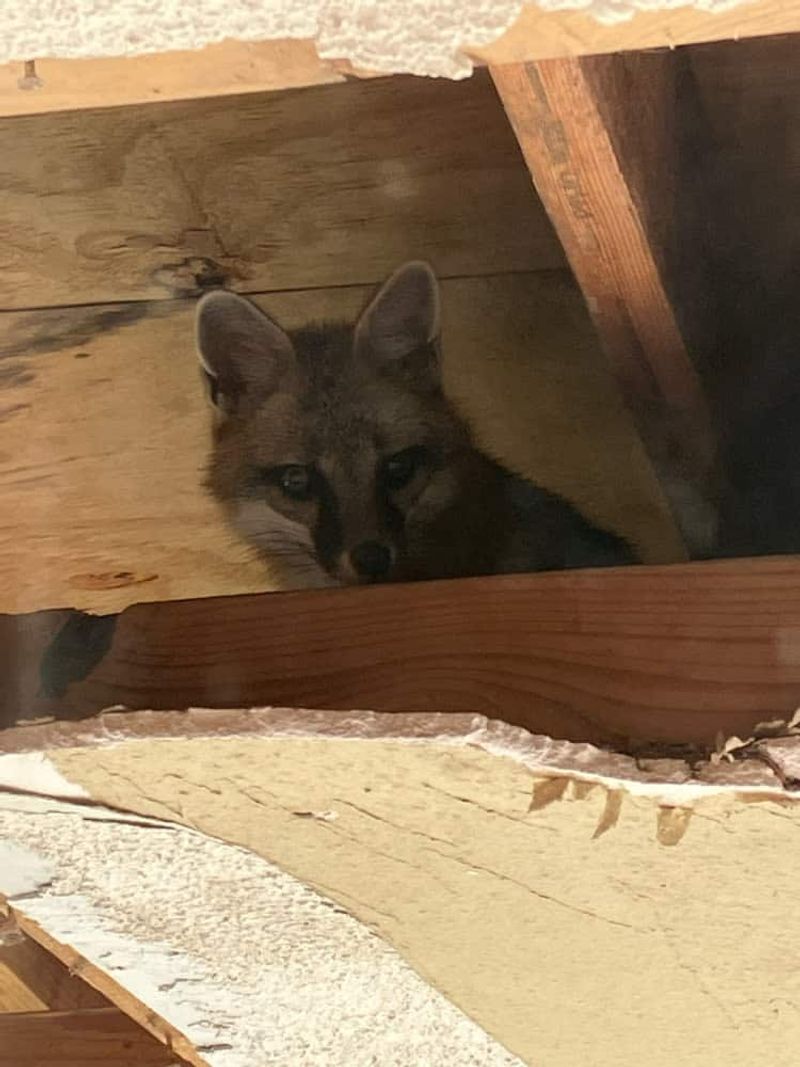
Repeat visits that seem tied to one corner of the yard, a specific spot under a deck, or an opening beneath a shed call for a more careful assessment before any action. A fox that keeps returning to the same location may be denning there, and a den in spring or early summer often contains kits.
Treating that situation the same as a casual crossing can cause real harm.
Never seal an opening under a porch, deck, or shed until you know for certain that no fox or kits are inside. Extension’s guidance on fox dens near structures and the Rutgers red fox fact sheet both advise against disturbing a den or blocking an entrance until wildlife professionals or a qualified wildlife-control operator confirm the space is empty and provide an appropriate exclusion plan.
Sealing an entrance while animals are inside can trap kits, cause the mother to dig through or damage the structure, or create a more serious problem than the one you started with.
What you can do in the meantime is clear dense vegetation and debris close to the house that might offer additional cover. That removes hiding places without directly disturbing an active den.
Secure openings only after professional confirmation that the space is clear.
NC State Extension’s wildlife chapter notes that North Carolina regulates wildlife control and that property owners dealing with substantial damage may need a depredation permit. Homeowners should not assume they can legally trap, relocate, or kill a fox without checking state rules first.
Calling local animal control or a licensed wildlife-control operator is the right starting point when a den situation is confirmed or suspected.
Know when the encounter becomes a call

Most fox sightings do not require a phone call to anyone. A fox that crosses the yard and leaves is not a reportable incident.
The situations that do require professional involvement are specific, and recognizing them quickly matters.
Contact local animal control or wildlife authorities if a fox is injured, appears trapped, is dead in or near your yard, repeatedly approaches people, attacks a person or pet, or shows abnormal neurological signs like staggering, circling, or paralysis. Do not attempt to handle a sick or dead fox under any circumstances.
NC Wildlife Resources Commission guidance is the right starting point for reporting an injured or abnormal wild animal in North Carolina.
If a person has been bitten or scratched by a fox, wash the wound thoroughly with soap and running water for 15 minutes, then contact a healthcare provider or your local health department right away. CDC rabies prevention guidance is direct on this point: do not wait for symptoms to appear before seeking a rabies-risk assessment.
Rabies is preventable with prompt post-exposure treatment, but that window matters.
For pets, the assessment depends on the nature of the contact. A bite, a scratch, or saliva reaching the pet’s mouth, eyes, another mucous membrane, or an open wound warrants urgent professional evaluation.
CDC guidance for veterinarians on rabies exposure in animals and the AVMA rabies brochure for pet owners both explain that management after a potential exposure depends heavily on the pet’s vaccination status and the specific circumstances of contact. If you are uncertain whether a qualifying exposure occurred, call a veterinarian and have vaccination records ready.
Saliva on intact fur or unbroken skin is not treated the same as a bite, but when circumstances are unclear, the safer move is to ask a professional rather than guess.
The safest fox response is calm distance
Boiled down to its simplest form, the right fox response follows a short sequence: if it is leaving, let it go. Move children and pets away from the animal before evaluating anything else.
Haze only a fox that is too close, actively approaching, or repeatedly using a problem area, not one that is fifty feet away and already headed out.
After the fox leaves, remove whatever may have drawn it in: unsecured food, open garbage, or dense cover next to the house. If the same animal keeps returning or shows any of the behavioral red flags covered earlier, contact local animal control or wildlife authorities.
For any bite, scratch, or saliva contact involving a person or a pet, reach out to a healthcare provider, veterinarian, or local health department without delay. CDC wildlife and pet guidance and Wisconsin Humane Society fox coexistence recommendations both point toward the same practical framework: separation first, hazing when necessary, professional help for anything beyond a routine crossing.
North Carolina’s confirmed wildlife rabies cases are a real reason to take abnormal fox behavior seriously and to act quickly after any qualifying exposure. They are not a reason to treat every fox sighting as a crisis.
CDC rabies prevention resources are available whenever you need to check next steps. A fox moving through your yard is a wild animal doing what wild animals do; a calm, informed response keeps it that way.