
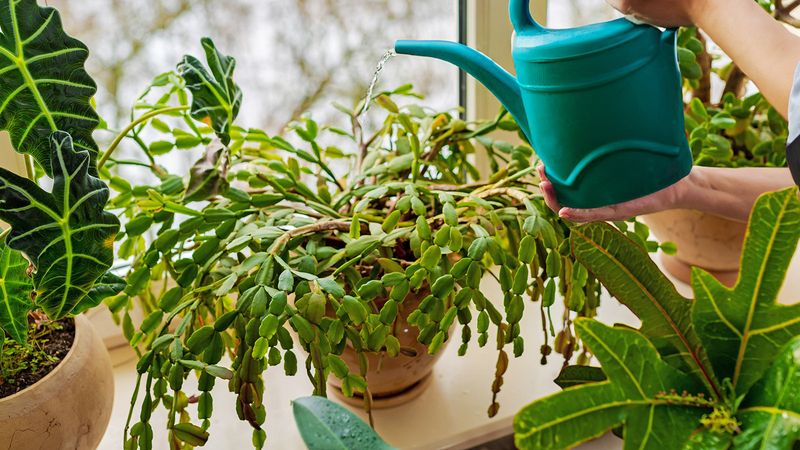
Your Christmas cactus looked fine last week, and now its stem segments are sagging like they have given up entirely. Before you reach for the watering can, stop – because adding water to the wrong problem can make things worse. Both too little and too much water can cause the same drooping look, and the only way to tell them apart is to check what is actually happening at the roots. This guide walks you through a simple diagnosis so you can choose the right response, not just the most obvious one.
Limp stems do not diagnose the watering problem
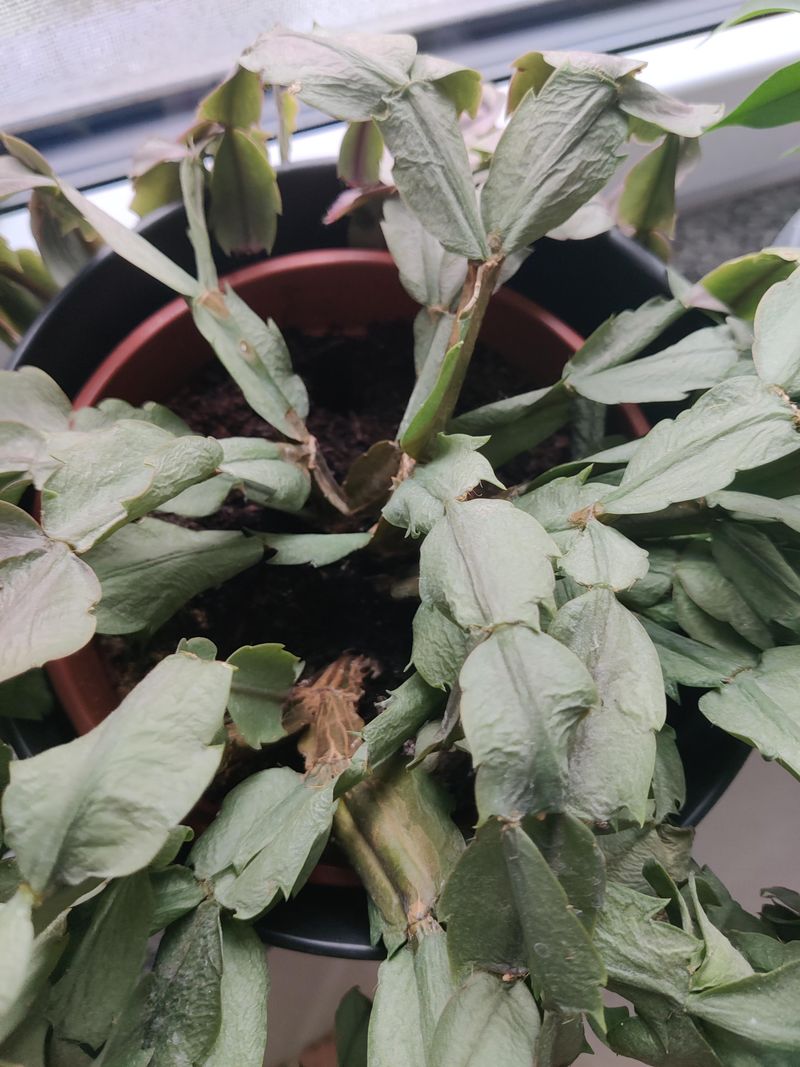
Sagging stem segments are one of the most alarming things a Christmas cactus owner can see, and the natural instinct is to water immediately. That instinct is not always wrong, but it is not always right either. UConn Extension’s holiday cactus guidance makes clear that both prolonged dryness and excess moisture can produce wilted, shriveled, or sagging stem segments – so limpness alone cannot tell you which problem you are dealing with.
Holiday cacti are tropical or woodland plants, not desert cacti. University of New Hampshire Extension explains that they generally prefer bright indirect light, a porous well-drained growing medium, and more regular moisture than a desert cactus would need – but they still require good drainage to stay healthy. That combination means they can suffer from either extreme.
Overwatering is particularly deceptive because saturated or poorly drained soil can damage or rot the roots. When roots fail, the plant cannot move water upward even when water is sitting right there in the pot. The stems look dehydrated while the soil is actually wet.
This guide helps you assess the most likely cause and choose a safer response. Symptoms can overlap, and a confident diagnosis is not always possible. Also worth noting: bud drop is a separate symptom from general limpness and has its own range of causes, including temperature changes, drafts, and light shifts – so do not automatically link it to watering.
Check moisture below the surface
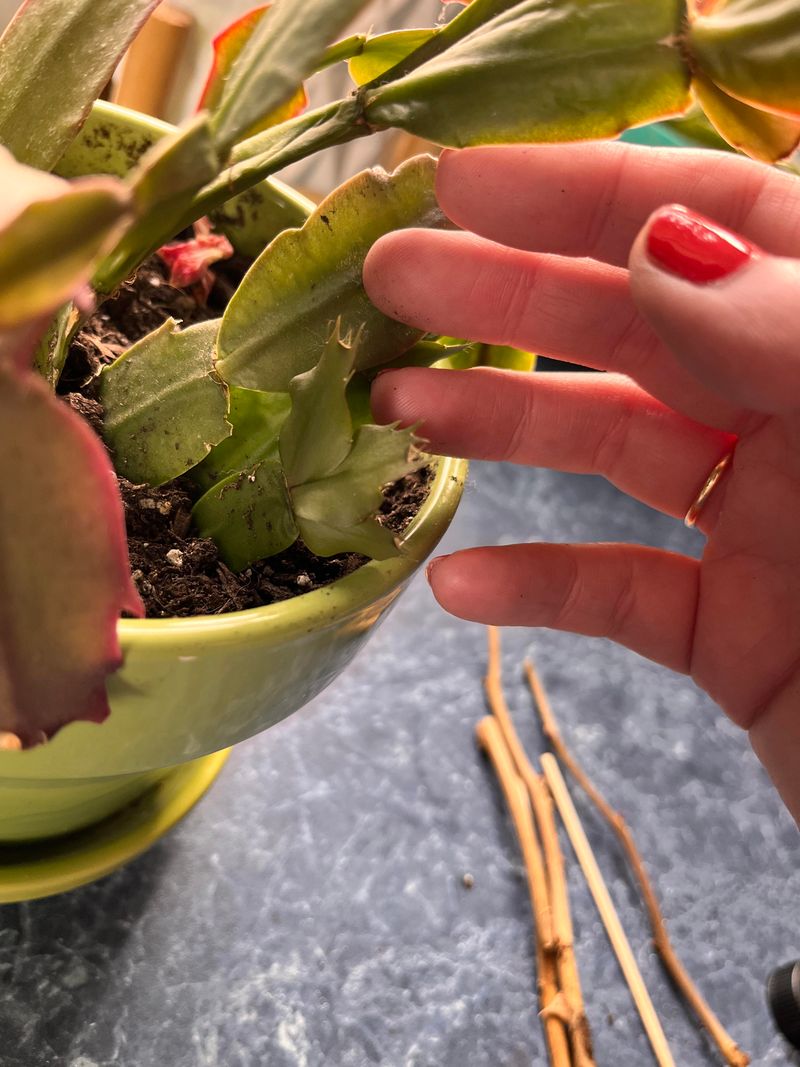
The single most useful thing you can do when your Christmas cactus droops is to push a finger an inch or two into the potting mix. Do not rely on how the stems look or how the surface of the soil appears – those signals can mislead you. UNH Extension recommends checking when the top inch of mix feels dry as a practical household starting point, but that threshold is not universal.
Pot size, container material, mix composition, light levels, room temperature, and the time of year all affect how fast the root zone dries. A small terracotta pot in a sunny window loses moisture quickly. A large plastic nursery pot in a dim corner can stay wet for weeks even when the surface feels dry to the touch. The top-inch rule gives you a starting point, not a finish line.
While you are checking moisture, also confirm that the container has drainage holes. University of Minnesota Extension emphasizes that proper drainage is non-negotiable for healthy roots. If the pot sits inside a decorative cache pot or on a saucer, tip it out and check for standing water underneath. Water that pools beneath the container keeps the root zone saturated long after you think the watering is done.
Dry mix calls for careful rehydration
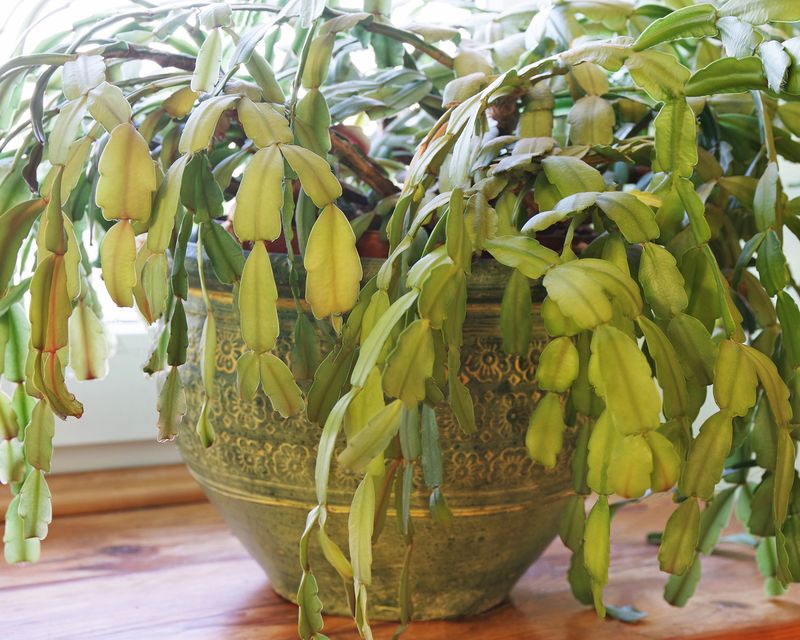
When you push a finger into the mix and it comes out dry an inch or two down, and the stem segments look wrinkled or shriveled rather than plump, underwatering is a reasonable explanation. The appropriate response is to water the root zone thoroughly – enough that excess water runs freely from the drainage holes. Then empty the saucer or cache pot completely so the roots are not sitting in that runoff.
UNH Extension’s guidance on Christmas cactus watering reinforces that thorough watering followed by good drainage is the correct approach, rather than small sips that only wet the top layer of mix while leaving the root zone dry.
There is an important exception for plants that have been severely neglected. UConn Extension recommends smaller, more frequent waterings for a badly desiccated plant rather than immediately applying a large volume all at once. Roots that have been dry for a long time may not absorb water normally, and flooding the pot can leave any remaining functional roots waterlogged before they recover.
After rehydrating, watch the plant over the next day or two. Some improvement in firmness is a good sign, but watering does not guarantee recovery. If the stems remain limp after the mix has had time to absorb moisture, the roots may not be functioning well enough to move that water upward – and that calls for a closer look at what is going on below the surface.
Wet mix points toward a root-zone problem
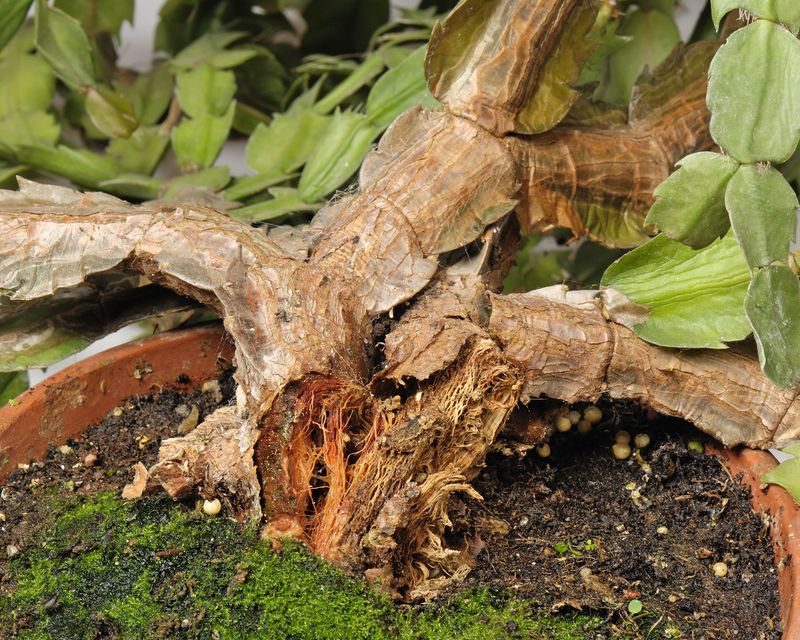
A limp Christmas cactus sitting in wet or soggy soil is a more worrying situation than a dry, wrinkled one. Adding more water to a plant that is already waterlogged will not help and will almost certainly make things worse. UConn Extension notes that saturated, poorly drained soil can damage or rot the roots, leaving the stems looking dehydrated even while moisture surrounds them – which is why the plant can droop just as badly from too much water as from too little.
Pause watering and gently unpot the plant to look at the roots. Healthy roots tend to be firm and light-colored. Dark, soft, decaying, or disintegrating roots are a strong indicator of root rot. Extension plant health guidance identifies visibly rotted roots as a serious warning sign, though a brief inspection cannot rule out all problems – some damage may be present even when the roots you can see look acceptable.
University of Wisconsin-Madison Extension documents that holiday cacti are susceptible to Phytophthora and Pythium root rots, both of which can cause wilting and plant decline. These pathogens thrive in persistently wet conditions, which is why drainage matters so much. If the mix smells sour or the roots crumble when touched, root rot is a strong possibility, and continued watering will not reverse the damage.
Choose intervention without adding unnecessary stress
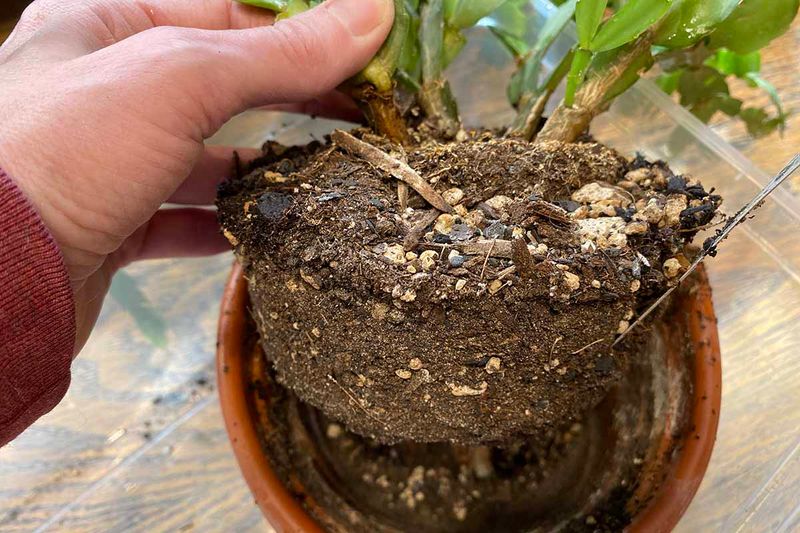
Once you have checked the moisture and looked at the roots, the next step depends on what you found. If the mix is saturated and the roots show damage, the priority is fixing the drainage or growing environment – not adding water. Let the mix dry out somewhat if the roots have any remaining function, and make sure the container can actually drain.
Repotting may make sense when the mix has broken down and compacted, when drainage has clearly failed, or when root rot has progressed enough that the current soil is a liability. Wisconsin Extension recommends repotting after flowering or when roots are visibly emerging from drainage holes, rather than at the first sign of drooping. Repotting during active flowering can add stress and trigger bud drop, so timing matters. Unnecessary repotting of a plant that is already struggling is not a low-risk move.
If the roots are badly damaged and recovery looks unlikely, propagation from healthy stem segments is worth considering. UC Master Gardeners of Sacramento County describe this as a way to preserve the plant genetically by rooting cuttings from segments that still look firm and green. It is a backup plan, not a treatment for root damage – the original plant may not survive even if cuttings root successfully.
Rule out light, temperature, and disease stress
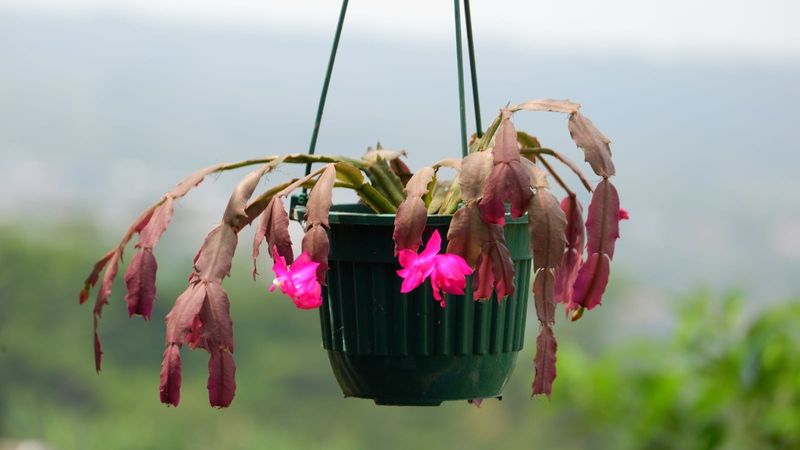
Sometimes the potting mix tells you neither a clear dry story nor a clear wet one, yet the plant is still drooping. Before assuming a watering problem, check the environment around the plant. Heat from direct midday sun can scorch and shrivel stem segments even when the roots have adequate moisture. A spot near a heating vent, a sunny south-facing window in summer, or a glass pane that concentrates afternoon light can all cause wilting that looks exactly like underwatering.
Cold stress works the same way from the opposite direction. Wisconsin Extension’s holiday cactus care guidance identifies cold drafts and abrupt temperature changes as causes of shriveling, discoloration, and wilting. A plant sitting near a drafty window, an exterior door, or an air conditioner can deteriorate quickly without any watering problem at all.
Disease is another possibility. Holiday cacti are susceptible to fungal and water-mold pathogens even when the grower has been careful. UConn Extension notes that bud drop specifically has multiple possible causes – overwatering, underwatering, temperature changes, drafts, and inadequate light can all trigger it, which is why bud drop should not automatically be blamed on watering alone. If the soil evidence does not match a watering explanation, move the plant away from direct sun, heat sources, and cold drafts before making any other change.
Prevent the next watering mistake
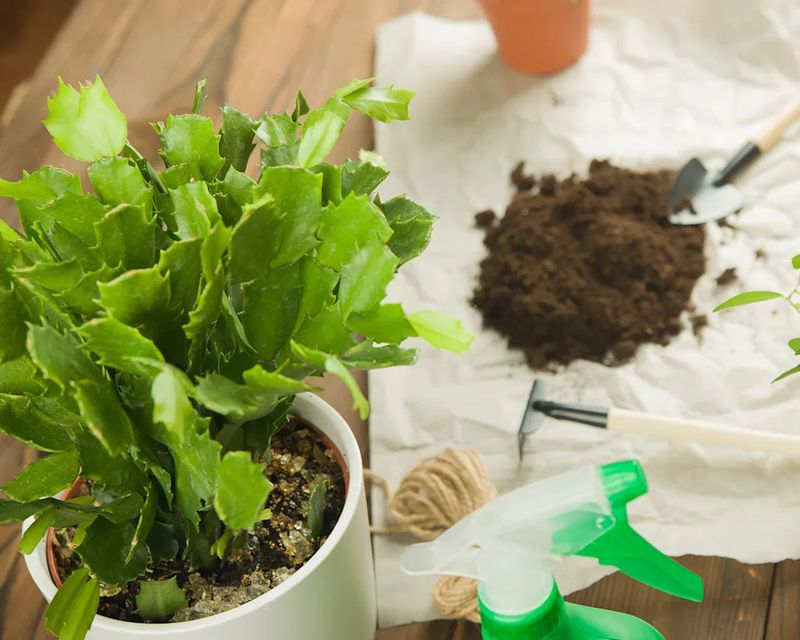
Good drainage is the foundation of long-term Christmas cactus health. University of Minnesota Extension advises using a container with drainage holes and avoiding a pot that is unnecessarily large for the root system. Extra soil volume stays wet long after the plant has used what it needs, and that lingering moisture is where root problems begin.
A porous, well-draining potting mix matters just as much as the container. A mix that holds too much water or compacts over time changes how quickly the root zone dries and makes the top-inch rule less reliable. If the mix feels dense or has been in the same pot for several years, it may no longer drain the way it should.
Seasonal adjustment is also part of prevention. UNH Extension explains that watering needs shift with growth cycles, light, and temperature – active growth periods call for more moisture than rest or bud-formation periods, but the plant should never be pushed to the point of shriveling. Check the mix regularly and let what you find guide your timing, not a fixed calendar.
A note on misting: University of Illinois Extension acknowledges misting as part of some holiday-cactus routines, but misting the foliage cannot correct dry soil, saturated roots, poor drainage, or root damage. It is a humidity supplement at best, not a substitute for sound root-zone care.
Use the soil to choose the next step
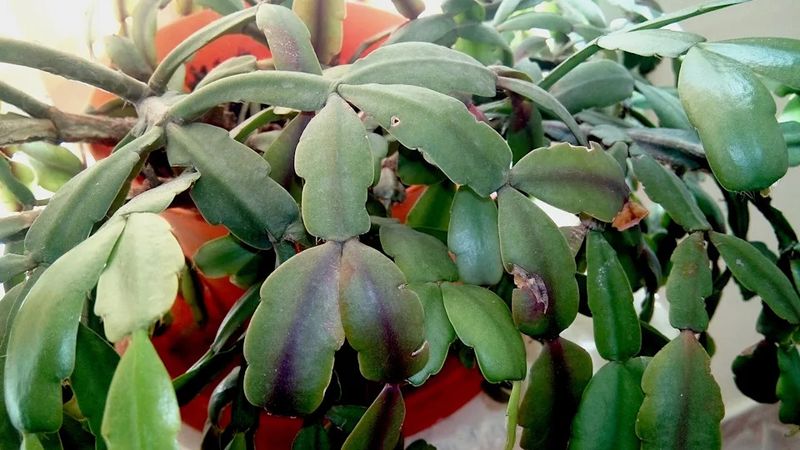
When your Christmas cactus droops, the potting mix is your most reliable guide. Dry mix combined with wrinkled or shriveled stem segments supports careful rehydration – water the root zone thoroughly, let the excess drain, and empty the saucer. Wet or soggy mix combined with persistent limpness points in the opposite direction: pause irrigation, check the drainage, and look at the roots before doing anything else.
UConn Extension is clear that this kind of check should come before any watering decision, because adding water to a plant with root damage or poor drainage will worsen the problem rather than solve it. UNH Extension reinforces that no fixed watering schedule can substitute for reading the actual conditions in the pot.
This decision rule helps you choose the safer response – it does not guarantee a diagnosis or a recovery. Symptoms can overlap, roots can be damaged in ways a quick inspection misses, and some plants will not recover regardless of how carefully you respond. Conditions also change, so a plant that needed water last week may need a drainage fix next week. Keep checking rather than settling into a routine, and let what you find in the soil guide each decision.