
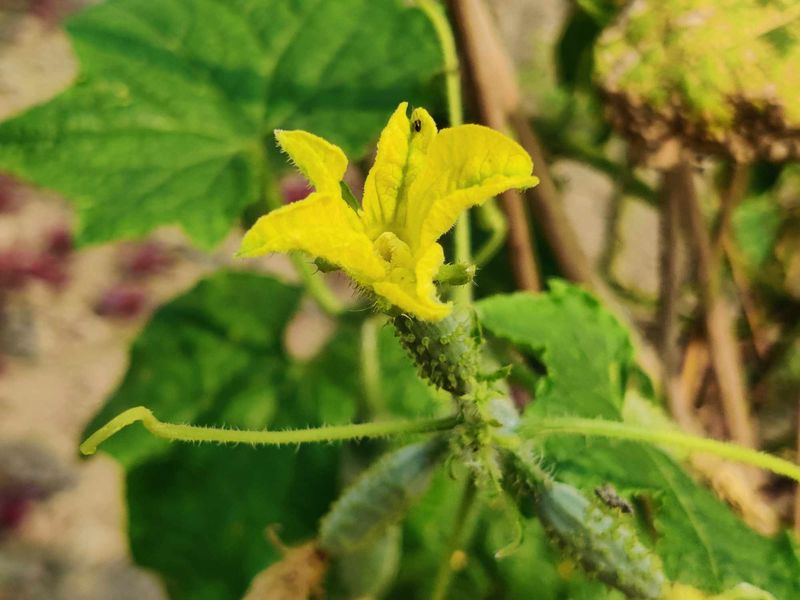
Walking out to your garden and finding a cucumber vine loaded with bright yellow flowers feels like a win, until you realize weeks have passed and not a single cucumber has appeared. Before you pull the plant or start adding fertilizer, know that this problem is almost always fixable once you understand what is actually happening. Six specific causes, from the timing of male flowers to a mismatch between your cultivar and your growing setup, explain the vast majority of cases. A close look at the flowers themselves is the best place to start.
Read the blossom before you change the care
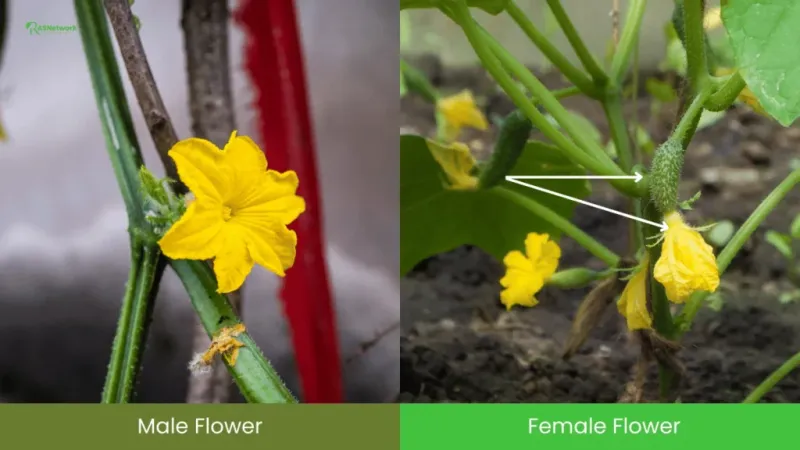
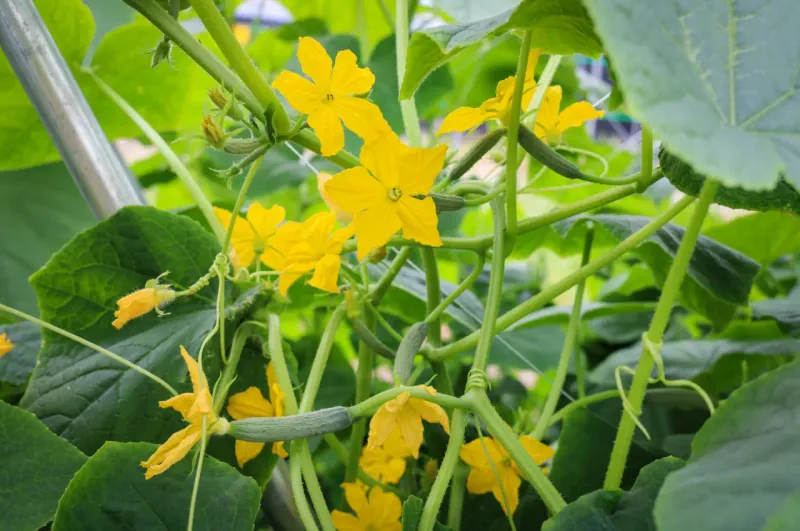
Grab a magnifying glass if you need one, and look at the base of several freshly opened flowers before you touch anything else in the garden. The single most common reason gardeners think their cucumber is failing is that every blossom they see is male, and male flowers cannot become cucumbers no matter how many of them appear.
Male flowers sit on thin, straight stems and have nothing behind the petals except a simple stalk. Female flowers are easy to spot once you know what to look for: a small, swollen, cucumber-shaped bump sits between the base of the blossom and the vine itself. That tiny swelling is the immature ovary, and it is the only reliable sign that the flower can develop into fruit.
According to University of Minnesota Extension guidance on growing cucumbers, a vine covered in yellow blossoms can still be producing mostly or entirely male flowers, and early male-flower drop is a normal part of the plant’s cycle rather than a sign of disease or failure. Changing the watering schedule, adding fertilizer, or pulling the plant based on male-flower drop alone is a misdiagnosis. Spend a few mornings checking multiple flowers, note whether any have the swollen ovary, and let that observation drive every decision that follows.
The vine may be following its normal flowering sequence
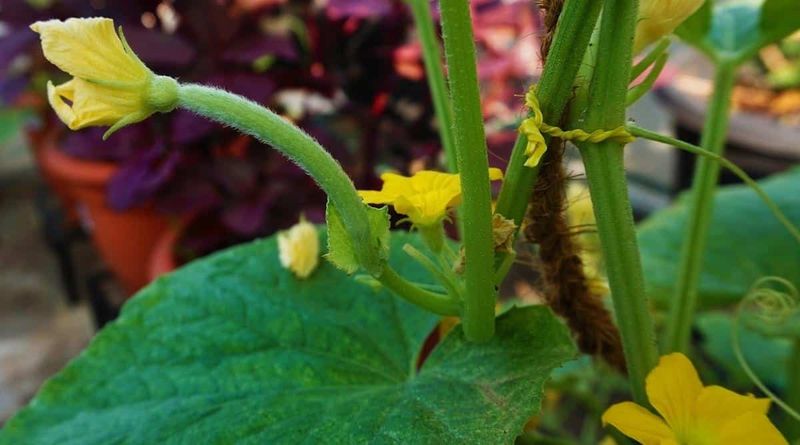
Cucumber plants are wired to produce male flowers before female flowers, sometimes by a week or two, and that sequence can look alarming if you are not expecting it. A flush of yellow blossoms that drops without producing any cucumbers is completely normal at the start of the flowering period, because those early blossoms are almost entirely male.
Rather than counting how many flowers fell, compare the flowers you see today with the ones that were open yesterday and the day before. Look specifically for that small swollen ovary at the base of each blossom. As Minnesota Extension explains, female flowers typically appear after the first wave of males, and their arrival signals that the plant is ready to set fruit. Bees visiting the vine during the all-male phase cannot pollinate anything, because there are no female flowers to receive pollen.
Reserve real concern for situations where female flowers are genuinely absent for an extended period alongside other signs of stress, such as yellowing leaves, stunted growth, or wilting that does not recover overnight. A vine that is simply working through its natural male-first sequence will begin producing female flowers on its own. Patience and daily observation will tell you far more than any immediate intervention.
Female flowers still need a pollen transfer
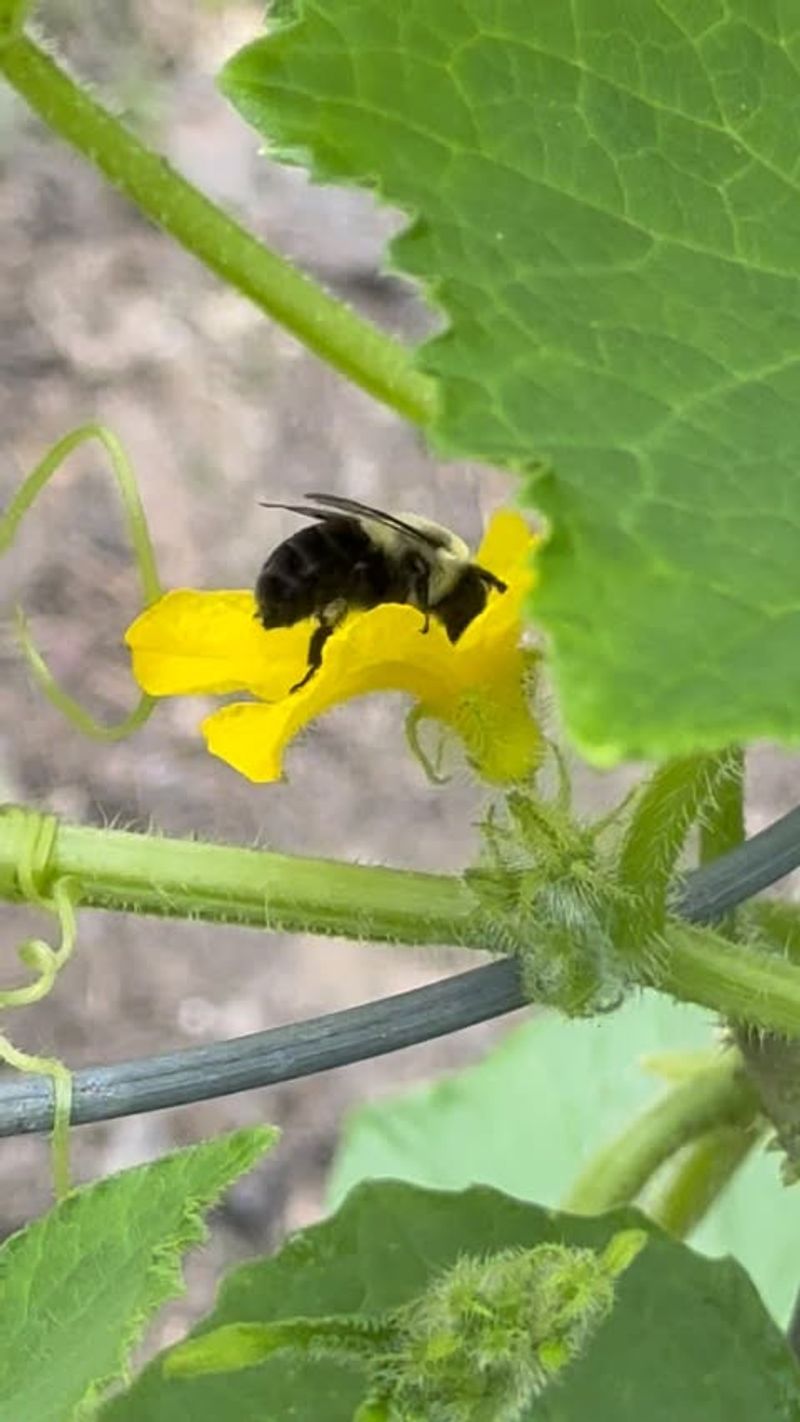
Once female flowers are open, pollen from a male flower must reach the stigma at the center of the female blossom for a cucumber to begin developing. On most standard outdoor cucumber varieties, insects do that work. When the transfer is incomplete or does not happen at all, the young fruit can drop, stay tiny, shrivel, flatten, curve to one side, or grow with very few seeds, all of which Penn State Extension associates with inadequate cucumber pollination.
Cucumber flowers open for only a limited window, often in the morning hours, so check them early. Assess whether pollinators are visiting during that window rather than concluding that no pollination happened simply because you did not see a honeybee. Bumblebees, squash bees, other wild bees, and some flies also transfer pollen. If you are using floating row covers to protect young plants from cucumber beetles, remove them once female flowers appear, because a covered vine cannot receive any insect visitors.
Minnesota Extension notes that row covers used against cucumber beetles must be lifted at flowering to allow pollination.
Hand pollination is a reasonable limited test when female flowers are open but pollinator traffic seems genuinely low. Use a small soft brush or a freshly opened male flower to transfer pollen directly to the center of the female flower’s stigma, as described in Utah State University Extension’s seed and pollination guidance. Do this in the morning while both flowers are open. Hand pollination addresses only the pollen-transfer step; it will not correct heat stress, water stress, nutrient excess, root problems, or a cultivar that does not fit your setup.
Weather can interrupt flowering and fruit set
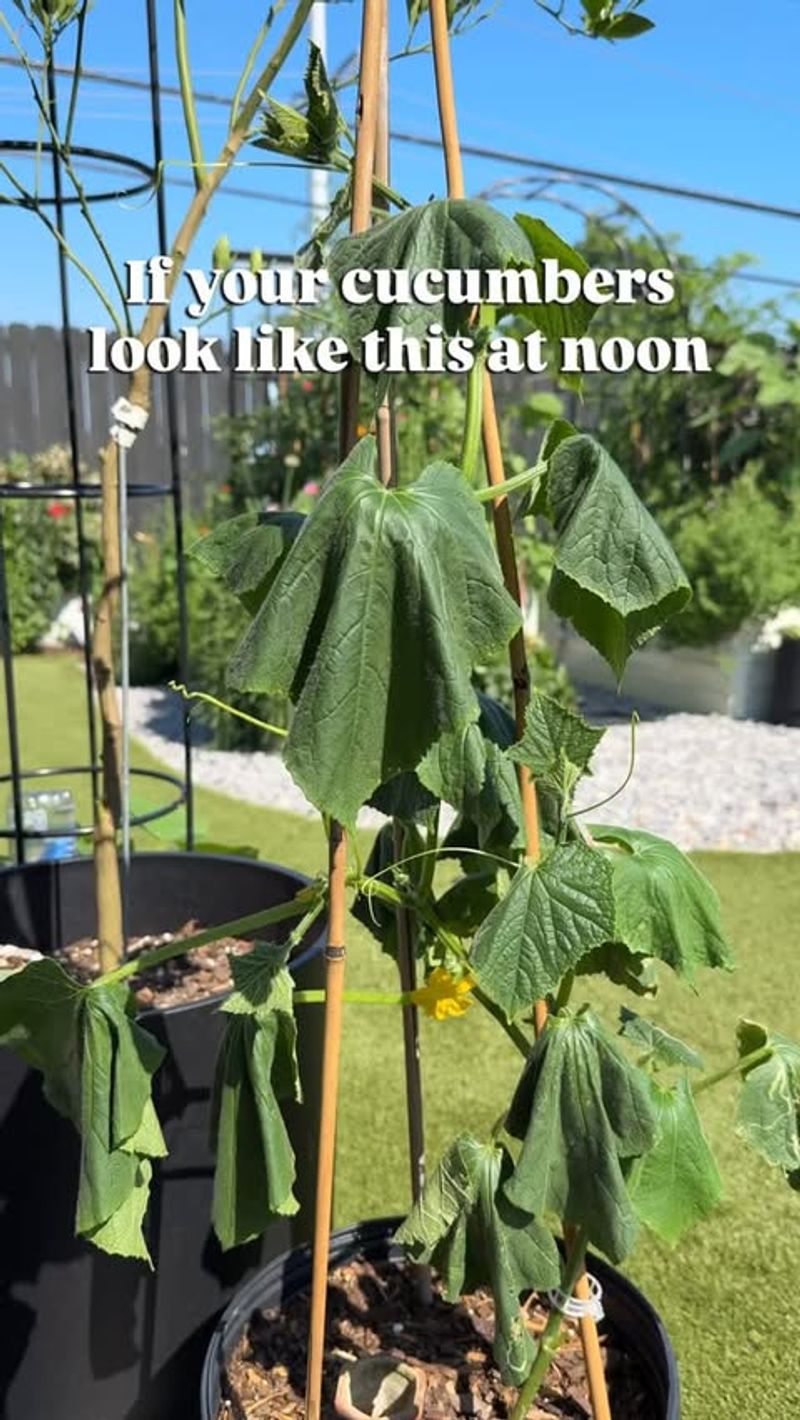
Weather plays a real but variable role in whether cucumber flowers develop into fruit. Heat, cold, prolonged rain, heavy cloud cover, low light, and wind can each interfere with flowering, pollen viability, insect activity, or the plant’s ability to hold a developing fruit, though the effects are not the same for every garden or every season.
Temperatures above roughly 90 degrees Fahrenheit are flagged by Penn State Extension’s high-tunnel cucumber guidance as a level at which fruit set can decline. Minnesota Extension’s vining vegetable growing guide also notes that hot conditions can reduce bee activity and contribute to poor pollination. Treat 90 degrees as a practical warning sign rather than a precise cutoff, because variety, humidity, nighttime temperatures, and how long the heat lasts all affect the outcome differently.
Compare the timing of your missing fruit set with recent weather. A stretch of high heat, several cloudy or rainy days in a row, or an unusual cold snap during the flowering period can explain a temporary gap in fruit production. When conditions moderate, the plant often resumes setting fruit without any change in care. The Minnesota Extension guide on heat stress in the vegetable garden confirms that recovery is possible once temperatures fall back into a more favorable range.
Moisture swings can stress flowers and young cucumbers
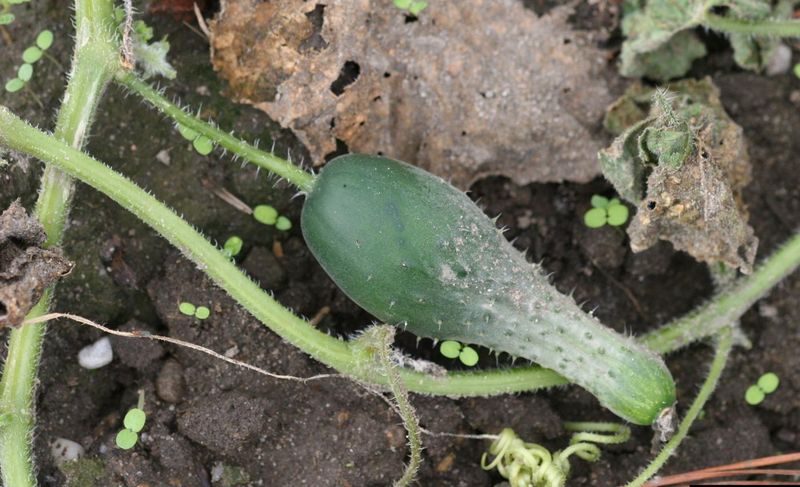
A cucumber plant juggling drought one week and waterlogged soil the next puts most of its energy into survival rather than fruit. Both extremes, and the swing between them, can cause flowers to drop before they open, young fruit to abort, or developing cucumbers to grow small, misshapen, or soft at the blossom end.
According to the Minnesota Extension vining vegetable guide, keeping soil moisture relatively even during flowering and fruit set gives the plant the best conditions for holding onto developing cucumbers. Mulch spread a few inches deep around the base of the plant slows evaporation, moderates soil temperature, and buffers the boom-and-bust cycles that often follow a heavy rain or a missed watering day. Deep, less frequent irrigation encourages roots to reach further into the soil rather than staying shallow where they dry out quickly.
The UC IPM guide to poor pollination in cucurbits notes that water stress can produce symptoms that look like pollination failure, including small or deformed fruit. If the vine also wilts during the day and does not recover by morning, or if the soil drains poorly and stays soggy, dig down a few inches to check root health before adjusting any other part of your care routine. Improving moisture consistency may help, but it is not a guarantee that every aborted flower will be replaced by a healthy cucumber.
Too much nitrogen can produce leaves instead of cucumbers
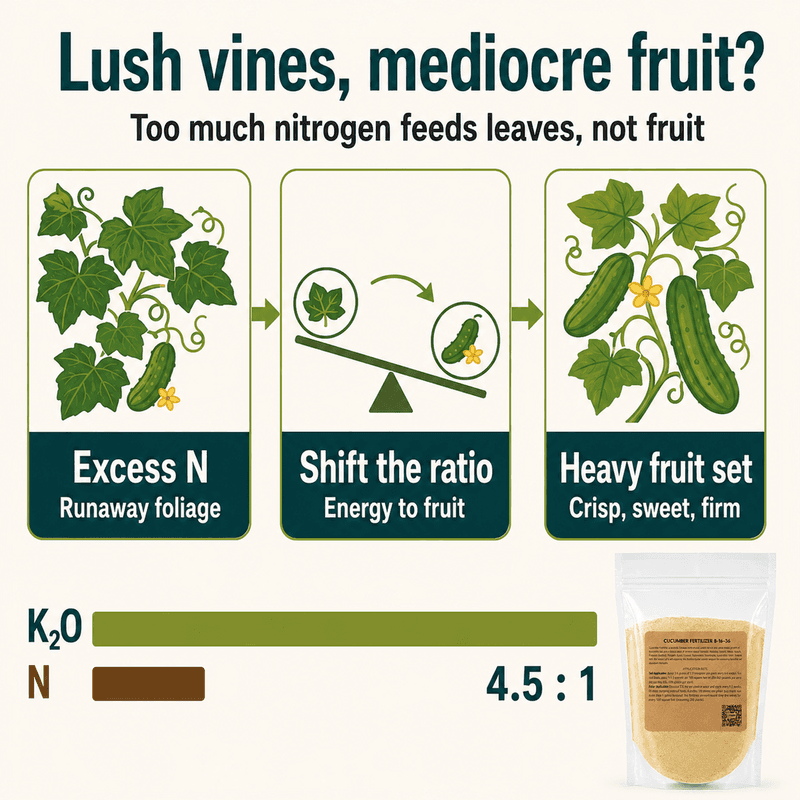
A cucumber vine that looks spectacular, deep green, vigorous, and thick with foliage, can still set almost no fruit when it has been pushed too hard with nitrogen. Excess nitrogen signals the plant to keep growing leaves and stems, and that vegetative drive can delay or reduce the production of flowers that develop into cucumbers.
Before adding any fertilizer in response to poor fruit set, review what you have already applied and when. The Minnesota Extension quick guide to fertilizing plants recommends basing fertilizer decisions on a soil test or product label directions rather than a visual guess about what the plant might be lacking. Applying additional nitrogen, phosphorus, boron, or any other nutrient without confirmed evidence of a deficiency risks making the imbalance worse.
Penn State’s high-tunnel cucumber production guide specifically identifies elevated boron as one factor associated with fruit abortion and warns that cucumbers are sensitive to boron overapplication. If your recent feeding schedule included heavy doses of a high-nitrogen fertilizer, scale back and allow the plant to shift its energy toward reproduction. Cutting back on nitrogen will not fix a pollination gap or a weather-related problem, but it removes one obstacle that may be compounding the others.
The cultivar must fit the growing setup
Seed packet language can feel like fine print, but for cucumbers it tells you whether your plant is even capable of setting fruit under your current conditions. Three main types exist, and confusing them leads to mismatched expectations and the wrong fixes.
Monoecious cucumbers produce both male and female flowers on the same plant and depend on insect visits to move pollen between them. These are the most common type in home gardens. Gynoecious varieties produce mostly or only female flowers, which sounds like an advantage until you realize they may need a compatible pollen source, often a monoecious plant, to produce fruit at all. As Minnesota Extension notes, some gynoecious seed packets include a few monoecious seeds specifically to supply pollen; if those seeds were separated out or not planted, the gynoecious plants may bloom without setting fruit.
Parthenocarpic varieties are a different situation entirely. These cucumbers can set fruit without any pollination, which makes them well suited to greenhouses, high tunnels, or enclosed spaces where insect access is limited. Minnesota Extension’s pollination requirements guide and Penn State’s high-tunnel guide both note that some parthenocarpic cultivars grown in enclosed settings may produce seeded or misshapen fruit if they are pollinated, though this depends on the specific cultivar and how it is grown. If you are growing a parthenocarpic type outdoors in an open garden, check the seed packet or breeder description carefully for any notes on pollination and environment before assuming something has gone wrong.
Adding a second cucumber plant to the garden may increase the supply of pollen and flowers, but it does not guarantee fruit set. Cultivar compatibility, pollinator activity, weather, and plant health all still apply.
Match one measured response to the evidence
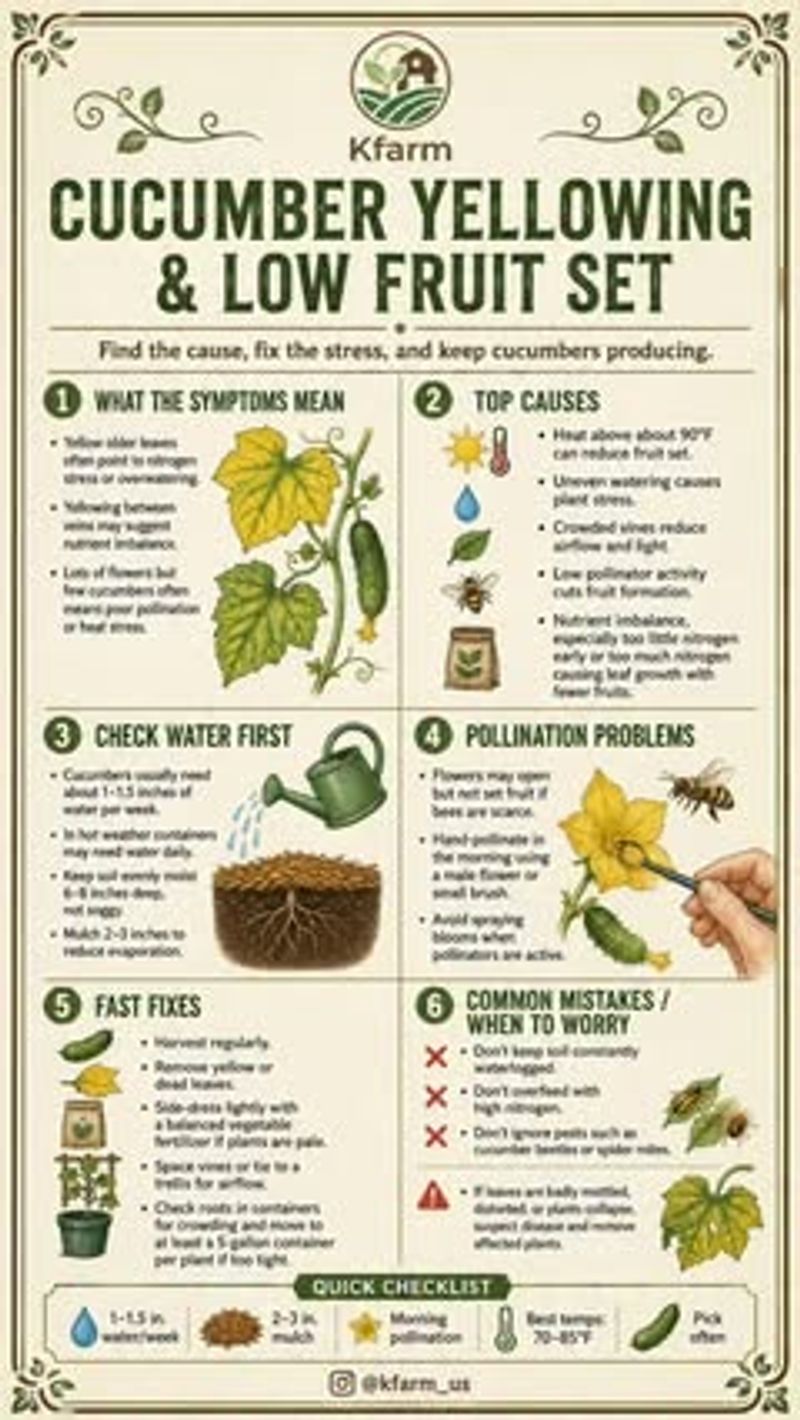
Work through a short checklist before changing anything. Verify that female flowers are actually present by checking for the swollen ovary. Assess whether pollinators are visiting during the morning flowering window, and consider whether row covers might be blocking their access. Recall the weather over the past two weeks and note whether heat, cold, or heavy rain coincided with the period when flowers were dropping.
Check soil moisture a few inches down and look at the vine’s roots and drainage if wilting or poor growth accompanies the flower problem. Review your fertilizer log and hold off on additional applications unless a soil test supports them. Pull up the seed packet and confirm whether your cultivar is monoecious, gynoecious, or parthenocarpic, and whether it is suited to an open outdoor garden or an enclosed structure. The Minnesota Extension vining vegetable guide, Penn State’s cucumber pollination resource, and Utah State Extension’s cucumber growing guide all reinforce matching the response to the strongest evidence rather than applying a blanket fix.
One more thing worth knowing: cucumbers do not fail to fruit because they cross-pollinate with squash, melons, or watermelons. That is a persistent myth. Causes overlap, pests and disease require visible symptoms to diagnose, and a vine covered in flowers is a promising start, not a promise of harvest. As Minnesota Extension reminds gardeners, not every female flower is guaranteed to reach the table, but the ones that do are worth the careful attention it takes to get there.